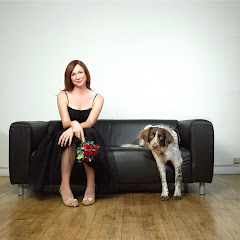
Well, my winter in Florida is coming to a close, and while I am always looking forward to returning to my beloved Hudson Valley, said Hudson Valley is still currently buried underneath many feet of snow, and the temperature rarely rises above freezing. So I am going to extend my stay in Florida for a few more weeks. If I can. Any takers?
I really enjoyed my time at Atlantic Center for the Arts and am always so impressed with and inspired by the other in artists in residence I meet there. I visited the studios of Steven and Katherine Aimone's abstract expressionist master workshop and was blown away by the paintings-in-progress that I saw. The smell of the paint and thinners, accompanied by the sound of classical music on someone's paint-spattered CD player--reminded me of my undergraduate days, when I myself was a painter. Ah, so long ago.
Anyway, it is customary when we leave Atlantic Center for the Arts to sign the wall inside our cottage closet. I was delighted to see some of my favorite writers' names next to mine: Nick Flynn and Rick Moody. Thanks ACA!
Wednesday, March 4, 2015
Friday, February 20, 2015
Prepare to be enchanted, uplifted and healed by my friend Drukmo Gyal Dakini's beautiful voice. Her new CD "The Tibetan Voice of Purification" has just been released and it is incredible. I can't wait for more people to discover her amazing voice. And, I'm thrilled to mention that Dakini sings on my CD as well. We're so blessed to have her on the "Beyond the Beyond" team.
Please "like" her artist page on Facebook and share news of her CD launch to help spread the world about this up-and-coming vocalist and healer. May all beings benefit!
Here is Dakini's website:
http://tibetdakini.wix.com/dragonmusic
Here is her Facebook page:
https://www.facebook.com/pages/%E0%BD%A0%E0%BD%96%E0%BE%B2%E0%BD%B4%E0%BD%82%E0%BD%98%E0%BD%BC%E0%BD%A2%E0%BE%92%E0%BE%B1%E0%BD%A3-Drukmo-Gya/530315830329008
Please "like" her artist page on Facebook and share news of her CD launch to help spread the world about this up-and-coming vocalist and healer. May all beings benefit!
Here is Dakini's website:
http://tibetdakini.wix.com/dragonmusic
Here is her Facebook page:
https://www.facebook.com/pages/%E0%BD%A0%E0%BD%96%E0%BE%B2%E0%BD%B4%E0%BD%82%E0%BD%98%E0%BD%BC%E0%BD%A2%E0%BE%92%E0%BE%B1%E0%BD%A3-Drukmo-Gya/530315830329008
Thursday, February 19, 2015
I spent much of my Valentine's Day
yesterday at the animal shelter doing energy work with the dogs. Mostly I just
sat with them in a state of compassion. Sometimes it can be tender and almost
painful to be in such a chaotic setting with an open heart. So when one of the
dogs I was sitting with (a very large ridgeback/cur mix) started to cry, I
started to cry as well. It can be so easy as a human in a crazy world to go
into a state of feeling helpless and believing that we are unable to change anything. But the good thing about
being a yogi and having a spiritual practice is that those practices help us
remember that we can always tap into the power of prayer. So I kept singing
mantras to the crying dog and praying for her happiness and telling her that I
was with her. That she was not alone. Soon, she quieted and then all the dogs in
the kennel room quieted. Something shifted. I'm not saying that "I"
did anything or made something happen, but it's amazing to witness the energy
of prayer in action. A few hours later that sweet, giant dog was adopted on the
spot. I watched her hop into a family's car with her tail wagging and I heard
someone say "good girl."
So...I think of one of my Buddhist teachers saying: "in a crazy world, the only thing that makes sense is compassion." I am so grateful for that teaching.
I've been re-reading Joseph Campbell, who includes Chief Seattle's beautiful letter to the American government is his book "The Power of Myth." Chief Seattle's words are really worth reading again. And again.
"The President in Washington sends word that he wishes to buy our land. But how can you buy or sell the sky? the land? The idea is strange to us. If we do not own the freshness of the air and the sparkle of the water, how can you buy them?
Every part of the earth is sacred to my people. Every shining pine needle, every sandy shore, every mist in the dark woods, every meadow, every humming insect. All are holy in the memory and experience of my people.
We know the sap which courses through the trees as we know the blood that courses through our veins. We are part of the earth and it is part of us. The perfumed flowers are our sisters. The bear, the deer, the great eagle, these are our brothers. The rocky crests, the dew in the meadow, the body heat of the pony, and man all belong to the same family.
The shining water that moves in the streams and rivers is not just water, but the blood of our ancestors. If we sell you our land, you must remember that it is sacred. Each glossy reflection in the clear waters of the lakes tells of events and memories in the life of my people. The water's murmur is the voice of my father's father.
The rivers are our brothers. They quench our thirst. They carry our canoes and feed our children. So you must give the rivers the kindness that you would give any brother.
If we sell you our land, remember that the air is precious to us, that the air shares its spirit with all the life that it supports. The wind that gave our grandfather his first breath also received his last sigh. The wind also gives our children the spirit of life. So if we sell our land, you must keep it apart and sacred, as a place where man can go to taste the wind that is sweetened by the meadow flowers.
Will you teach your children what we have taught our children? That the earth is our mother? What befalls the earth befalls all the sons of the earth.
This we know: the earth does not belong to man, man belongs to the earth. All things are connected like the blood that unites us all. Man did not weave the web of life, he is merely a strand in it. Whatever he does to the web, he does to himself.
One thing we know: our God is also your God. The earth is precious to him and to harm the earth is to heap contempt on its creator.
Your destiny is a mystery to us. What will happen when the buffalo are all slaughtered? The wild horses tamed? What will happen when the secret corners of the forest are heavy with the scent of many men and the view of the ripe hills is blotted with talking wires? Where will the thicket be? Gone! Where will the eagle be? Gone! And what is to say goodbye to the swift pony and then hunt? The end of living and the beginning of survival.
When the last red man has vanished with this wilderness, and his memory is only the shadow of a cloud moving across the prairie, will these shores and forests still be here? Will there be any of the spirit of my people left?
We love this earth as a newborn loves its mother's heartbeat. So, if we sell you our land, love it as we have loved it. Care for it, as we have cared for it. Hold in your mind the memory of the land as it is when you receive it. Preserve the land for all children, and love it, as God loves us.
As we are part of the land, you too are part of the land. This earth is precious to us. It is also precious to you.
One thing we know - there is only one God. No man, be he Red man or White man, can be apart. We ARE all brothers after all."
"The President in Washington sends word that he wishes to buy our land. But how can you buy or sell the sky? the land? The idea is strange to us. If we do not own the freshness of the air and the sparkle of the water, how can you buy them?
Every part of the earth is sacred to my people. Every shining pine needle, every sandy shore, every mist in the dark woods, every meadow, every humming insect. All are holy in the memory and experience of my people.
We know the sap which courses through the trees as we know the blood that courses through our veins. We are part of the earth and it is part of us. The perfumed flowers are our sisters. The bear, the deer, the great eagle, these are our brothers. The rocky crests, the dew in the meadow, the body heat of the pony, and man all belong to the same family.
The shining water that moves in the streams and rivers is not just water, but the blood of our ancestors. If we sell you our land, you must remember that it is sacred. Each glossy reflection in the clear waters of the lakes tells of events and memories in the life of my people. The water's murmur is the voice of my father's father.
The rivers are our brothers. They quench our thirst. They carry our canoes and feed our children. So you must give the rivers the kindness that you would give any brother.
If we sell you our land, remember that the air is precious to us, that the air shares its spirit with all the life that it supports. The wind that gave our grandfather his first breath also received his last sigh. The wind also gives our children the spirit of life. So if we sell our land, you must keep it apart and sacred, as a place where man can go to taste the wind that is sweetened by the meadow flowers.
Will you teach your children what we have taught our children? That the earth is our mother? What befalls the earth befalls all the sons of the earth.
This we know: the earth does not belong to man, man belongs to the earth. All things are connected like the blood that unites us all. Man did not weave the web of life, he is merely a strand in it. Whatever he does to the web, he does to himself.
One thing we know: our God is also your God. The earth is precious to him and to harm the earth is to heap contempt on its creator.
Your destiny is a mystery to us. What will happen when the buffalo are all slaughtered? The wild horses tamed? What will happen when the secret corners of the forest are heavy with the scent of many men and the view of the ripe hills is blotted with talking wires? Where will the thicket be? Gone! Where will the eagle be? Gone! And what is to say goodbye to the swift pony and then hunt? The end of living and the beginning of survival.
When the last red man has vanished with this wilderness, and his memory is only the shadow of a cloud moving across the prairie, will these shores and forests still be here? Will there be any of the spirit of my people left?
We love this earth as a newborn loves its mother's heartbeat. So, if we sell you our land, love it as we have loved it. Care for it, as we have cared for it. Hold in your mind the memory of the land as it is when you receive it. Preserve the land for all children, and love it, as God loves us.
As we are part of the land, you too are part of the land. This earth is precious to us. It is also precious to you.
One thing we know - there is only one God. No man, be he Red man or White man, can be apart. We ARE all brothers after all."
Sunday, January 4, 2015
Saturday, January 3, 2015
The Tender Journey of Mourning a Dog
-->
I am back in Florida for the winter, and as soon as I
arrived I started to miss my dog Chloe intensely. And mourn her loss. The same thing happened last year when I came
down at this time. Last year, I thought my reaction was simply delayed
grief—Chloe had died in September of 2013 and I had arrived in Florida last
January. And fall is always surreal to
me anyway, what with the holidays and all. I don’t really become myself again
until after the New Year. But, here we are again, in January of 2015, meeting
the same fresh grief even though over a year has passed since my beloved
friend’s death. I thought in many ways I had moved on.
Given that I enjoy over-analyzing everything, I’ve started to
analyze this as well. What is about
Florida—rather than New York, my literal and heart home—that makes me miss my
dog more? And, more curiously, what is it about Florida that makes me remember her more. Is it the fact that Chloe loved the water,
especially Florida salt water, because of the quality and number of fish those
waters offered? And because the water on the intercoastal side of Canaveral
National Seashore, where I took her every day, was so wonderfully clear Chloe
could see the fish easily, and chase them for hours? Or because
sometimes--inexplicably and wonderfully—sleek and playful dolphins would join
her in her chase? Was she simply happier here?
It’s hard to say. First of all, I think dogs can be happy
everywhere, and Chloe had a good life. I took her to the water nearly every day
up in New York as well, where she could troll for fish in the Hudson River or
one of the many Catskill mountain streams. And while there are certainly more
fish around the bays of Canaveral than the still-struggling Hudson River, I
don’t think dogs are so concerned with quantity. But who knows? Chloe was an exceedingly smart
dog and could probably count. In
French. Anyway, she fished there, she fished
here; she had fun there, she had fun here; so why do I miss her more when I am
here?
And even if she was happier here, why was that? It can’t be because I was or am happier in
Florida because frankly, I am not.
There’s the great irony. The only reason I come to Florida in the winter
is to escape the terrible seasonal depression that used to slay me every
October through March up in New York. After several years of experimenting with
every possible medical and alternative solution (and yes we tried light boxes,
yes we tried magnetic therapy and Vitamin D; and supplements, and herbs; and
prayanaya and mantra and kriya; and even meds) my doctor finally advised me to
simply go south for the winter. “Follow
the sun,” he said. And because I trust this man, and because I happen to live a
lifestyle that allows me to follow the sun, I did. And Chloe, for the last four years of her
life, followed with me.
I have since discovered that the major factor of my seasonal
depressions is and was actually Christmas, and that it takes me several weeks
to recover from that onslaught, but that’s another story for another day. We’re here to talk about Chloe.
It occurred to me this morning, as I was strolling through
the weekly farmer’s market and remembering how Chloe used to enjoy coming
here—especially when we got to Organic German Pretzel Man and he gave her a
sample of his famous apple cinnamon strudel—that Florida can be a devastatingly
lonely place for the young and single. That’s primarily because there are so many
Olds and Marrieds here. I’m talking the cutest little old couples you have ever
scene, enjoying their final years together in quiet, benign companionship. In New York, the energy is of striving,
achieving, go-getting; here the energy is more simple and accepting. People
simply have routines and follow them. Paths aren’t being blazed per se; they
are being strolled and revisited. With walkers and wheelchairs. And no, I’m not trying to be depressing here;
nor am I being judgmental. I think the retirees are beautiful in their
non-striving. They are simply being. And enjoying. It’s very Buddhist, in a
way. And they don’t even know it. Hey man, I’m so Buddhist I don’t even know it.
There’s a teaching in there somewhere.
I have a blind friend from New York who used to spend every
winter in Florida. Now he has a new partner and she has convinced him to winter
in Mexico this year because the old people in Florida are, in her opinion, too
depressing. My blind friend, who was
born sighted and lost his vision in his late twenties, could empathize. Plus,
he is an eternally good sport. His relationship to Florida as a blind person
was one of weather and temperature and smell and sensation. Give him warm calm
waters in which to swim, and hot sun to dry him off and he’s happy. “So I’m fine with Mexico if that’s what she
wants.”
But weren’t we talking about how much I miss my dog? I realized this morning as I walked through
the market—alone—that the reason I miss her so much when I am here might be
that I have fewer friends here. And that when I first moved here five years
ago, she was my only friend. I’ve often joked through the years about how
I had become a stereotype—a single, crazy dog lady who divorces her husband,
adopts a dog, decides she values canine companionship more than that of the
human male, and Never Gets Married Again. I mean, I didn’t decide ten years ago never to get married again but that seems to
be what has happened. But again, let us
bring the subject back to the dog.
I think the relationship shared between a single woman and
her dog who find themselves together in a new an unfamiliar setting is a very
special relationship indeed. There were times, when I first started coming to
Florida and didn’t know anyone yet, when I wouldn’t speak to another human for
days. I never really realized how innately shy I actually am until I left New
York. The realization only resulted in making me more shy. In the meantime, I
conversed with my dog. I don’t mean we
conversed literally, beyond the silly baby talk I subjected Chloe to (and
enjoyed) on a daily basis. I mean that
we communicated, silently and thoroughly, about what her needs were and what I
could do to make sure they were met. She
let me know when she was hungry and when she was tired, when she needed to
relieve herself and when it was time to nap, what gave her pleasure and what
did not. She even—I kid you not—used to remind me when it was time to give her
her herbs and acupressure sessions. In
turn, she did her best to keep me happy.
This is nothing you haven’t heard before. We had a routine, as caretaker
and caretakee, that we both benefited from. What I didn’t realize is how deeply
our lives were entwined as companions. I didn’t realize this until she had
un-entwined herself, left her body, and moved on to the non-physical realm,
where she now resides, huge and expansive, like a sky full of stars.
These people I see in Florida—these sweet old
couples—they’re entwined, too. How do I
explain to them that my other half—the person I’m currently mourning—was
actually a dog? What is a crazy dog lady to do?
I remember once, years ago, well before I had adopted my
first dog Wallace, receiving a Christmas card from one of my then-husband’s
acquaintances, and it was one of those custom-made cards containing a
photograph of herself and her dog. It was the first time I had seen such a
thing. I remember feeling two emotions
of which I am now ashamed: pity. And alarm. As in: don’t ever let me be the person who sends out a picture of myself and
my dog as if we were a couple. And
now, this past Christmas, what did I find myself wishing? That someone, anyone,
had taken a picture of me and Chloe dressed up in Santa Claus hats so that I
could have sent that out as a Christmas card.
It’s just regret. And guilt. I’m allowed to say “just”
because I know these states of mind are fleeting and that once I release
whatever it is that needs to be released in relationship to Chloe, and in
relationship to Chloe in Florida, I’ll probably come back and delete this post,
because I’ll have started to feel embarrassed about having expressed myself in
the first place. Or maybe I’ll have
something more meaningful to say.
In the meantime, Christmas is over, the sun is shining, and
I have work to do. There are books to finish and albums to finish and animals
at the shelter to take care of. So that’s where I will be. Thinking of Chloe,
grateful for her goodness, and inspired to pass it on.
Friday, December 5, 2014
Top Five Things Shelters Can Do To Improve Adoption Rates
I was just re-reading an old interview in Bark magazine with journalist Kim Kavin, the author of LITTLE BOY BLUE: A Puppy’s Rescue from Death Row and His Owner’s Journey for Truth.
Bark asked her: "What five things can shelters do to improve their adoption rates?"
Kim answered:
1. Make adoption a priority. At the shelter where Blue was found, unless a rescue group intervenes, the annual kill rate is about 95 percent. It is accepted as policy that the majority of dogs will die. Shelter managers need to make it a policy that rescue and adoption are a big part of the job. Nationwide, this attitude is the first thing to change in shelters that improve their adoption rates.
2. Hire people who embody the philosophy of rescue. Sometimes personnel changes are necessary, but sometimes people can grow through education. Either way, you need people on-site every day who care about adoption, and you need to give them the resources and job flexibility they need to succeed.
3. Give the dogs names. At the shelter where Blue was found in Person County, N.C., the dogs don’t have names; they are given numbers and expiration dates. The adoption coordinator at Robeson County Shelter in Saint Pauls, N.C., told me that when she began working to turn their program around, the first thing she did was name the dogs, because a name shows that someone cares about them as individuals. It affects the entire staff’s attitude toward what happens there day in and day out. It is harder to kill a dog who has a name. It makes people want to do more to help the dogs.
4. Tap into the nationwide rescue community via sites like Petfinder.com [4] (full disclosure: Barron’s is donating a portion of the proceeds from Little Boy Blue to the Petfinder Foundation [6]). Even if you’re in an economically depressed area and can’t find local adopters, you can find responsible rescue groups in other areas—even in other states—that are willing to transport and foster the dogs while marketing them for adoption. The pipeline exists. Use it.
5. Take photos of the dogs outside of the shelter environment. With my own foster dogs, the photos I take of them just a few hours after they’ve had a chance to calm down and play in my back yard are far superior to those I get at the shelter. Anything you can do to help them relax will make them look happier and healthier in their adoption photos, and thus increase their chances of finding a home.
Here's the whole interview if you'd like to read it. This little piece is such a gem! Coming from the world's best dog magazine, of course!
http://thebark.com/content/call-action
Bark asked her: "What five things can shelters do to improve their adoption rates?"
Kim answered:
1. Make adoption a priority. At the shelter where Blue was found, unless a rescue group intervenes, the annual kill rate is about 95 percent. It is accepted as policy that the majority of dogs will die. Shelter managers need to make it a policy that rescue and adoption are a big part of the job. Nationwide, this attitude is the first thing to change in shelters that improve their adoption rates.
2. Hire people who embody the philosophy of rescue. Sometimes personnel changes are necessary, but sometimes people can grow through education. Either way, you need people on-site every day who care about adoption, and you need to give them the resources and job flexibility they need to succeed.
3. Give the dogs names. At the shelter where Blue was found in Person County, N.C., the dogs don’t have names; they are given numbers and expiration dates. The adoption coordinator at Robeson County Shelter in Saint Pauls, N.C., told me that when she began working to turn their program around, the first thing she did was name the dogs, because a name shows that someone cares about them as individuals. It affects the entire staff’s attitude toward what happens there day in and day out. It is harder to kill a dog who has a name. It makes people want to do more to help the dogs.
4. Tap into the nationwide rescue community via sites like Petfinder.com [4] (full disclosure: Barron’s is donating a portion of the proceeds from Little Boy Blue to the Petfinder Foundation [6]). Even if you’re in an economically depressed area and can’t find local adopters, you can find responsible rescue groups in other areas—even in other states—that are willing to transport and foster the dogs while marketing them for adoption. The pipeline exists. Use it.
5. Take photos of the dogs outside of the shelter environment. With my own foster dogs, the photos I take of them just a few hours after they’ve had a chance to calm down and play in my back yard are far superior to those I get at the shelter. Anything you can do to help them relax will make them look happier and healthier in their adoption photos, and thus increase their chances of finding a home.
Here's the whole interview if you'd like to read it. This little piece is such a gem! Coming from the world's best dog magazine, of course!
http://thebark.com/content/call-action
Subscribe to:
Posts (Atom)


.jpg)