Given that I have no time to write any new blogs (the novel is due in 3 weeks!), I thought I would post some old materials—The original Rex and the City columns, to be precise. These started appearing in the Bark magazine back in August of 2000—before the Bark had a website even. So none of these columns have appeared online.
As many of you know, these columns eventually led to the publication of my best-selling memoir (basically a fleshed-out version of the columns). But some readers have expressed interest in seeing the ‘originals.’ So for the next three months, I’ll be posting one column per week, in order of their appearance in the Bark.
Rex and the City –
Part 1): The Decision
On this particular summer Saturday, on this last day of life as I knew it without a dog, my first thought was: what to wear. I had planned to wear a pink linen dress, with a matching pink hat, but when I pulled said dress out of the closet I saw that there was a big stain on its backside. Gum or something. From sitting on the subway, no doubt. One of the great risks you take, in New York City, is sitting down.
“Find something else to wear,” Ted said. “And hurry. We’re supposed to be at Chad’s by noon.”
Ted was the live in boyfriend. Chad was our friend from Long Island friend who had been promising for months to take up to Lloyd Neck Country Club, one of the most exclusive clubs in the area to which he belonged. And finally, today, we were going!
But what to wear? Most New York girls in such crises will produce the old standby: the little black dress. I paired mine with a Wonder bra and platform shoes.
“Okay, let’s go,” I said to Ted. We lived together for the same reasons most couples cohabitated in New York City: because it saved us money and we got instant sex. Marriage, I suppose, was a p-p-possibility, if only another M-word could enter the equation on my behalf: Maturity.
“You can’t wear that,” Ted announced.
“Why not?”
“You can’t wear black to Lloyd Neck.”
“I can.”
“I’m telling you, you can’t. Just put on a polo shirt and those white shorts.”
“I don’t want to look dowdy.” I was twenty-seven and already terrified of such things.
“Who’s going to care?”
“I’ll care.” Deep down, I knew that Ted was right. But something in me that day didn’t want him to know I knew he was right. “Besides. This is the only thing I have.”
“You have a whole closet full of clothes.”
“This is the only thing that fits.” My voice rose a little at the end, and cracked, and Ted must have sensed that I was headed beyond reason, so black dress it was.
But when we got to Chad’s he, Chad, took one look at my get-up and said we wouldn’t be going to the Club. “I know of a great place in Bayville. It’s a clam shack right on the beach.”
On the way there, I stared out the window and sulked. We passed mansion after fabulous mansion, with stately oak trees and the fine green lawns. It seemed that most of the wealth of the world could be found on this slender, riotous island (one can’t help but make Gatsby references in these parts) and the fact that I was so close to and yet so far from it made me sulk. I had done it all wrong. And I cursed myself for not heeding the #1 rule of WASPdom: no cleavage. No black.
Later, Ted said I was being paranoid. That Chad simply didn’t feel like going to the club that day. “He’s like that. He changes his mind constantly.” But I knew better. Some people have gay-dar; I have snob-dar.
Lunch was a disappointment. The crabs tasted as if they had been soaked in formaldehyde and above our heads was a giant banner that said, WET T-SHIRT CONTESTS THURSDAY NIGHTS. Ted and Chad talked about old friends from college, but I wasn’t listening. I was too busy staring in horror at the sad, haggard-looking woman drinking margaritas by herself at the bar. She was smoking Kools and wearing—black.
It’s strange how the small, petty moments can be the ones that change your life. It was because of that woman, and because of my convictions that my life was closer to hers than it was to, say, Daisy Buchanan’s, that I decided, on the way back to the City, that Ted and I should stop at the animal shelter and look at—just look at—dogs. “We drove all the way out here,” I reasoned. “We might as well do something productive with this day.”
Dogs were something Ted and I had talked about haphazardly, in those moments when we got along so well we could giddily envision a future together. In our two years, we’d also talked about travelling, and moving to a bigger apartment, and getting a new computer, a new mattress, new careers, new lives, but so far none of those things had materialized. And so suddenly, there in that hot car, I decided I was tired of being an all-talk-no-action kind of person. I want to call myself on something. And call Ted on it, too.
“Let’s do it,” I said. “Let’s look at dogs.”
At the shelter, we headed straight for the puppy section, but in doing so we walked past the adult dogs first. Thus we saw Rex. I want to say that there was a moment of Knowing, an instant bond, but, with me at least, this was not the case. He was a beautiful specimen, a white and brown spaniel, like one of those proud, haughty sporting dogs you see in English paintings. But a puppy he was not.
A volunteer approached us. She struck me as a perky high school student who hoped someday to be a perky vet. She carried a clipboard and wanted to know if we were interested in adopting today. “Oh, we’re kind of just looking around today,” I said, but Ted stopped and asked her about the Spaniel: how old was he was? Where’s he from?
She said Rex was rescued from a pound in Connecticut. He was about to be put down when North Shore showed up. “He’s only been here three days. Do you like him? Do you want to try him out?”
“Try him out?”
“Walk him. We have a walking room. We call it the bonding room.”
“Not yet,” Ted said. “Maybe later.”
We made the rounds of the adult section and fell in love a dozen times. There was Dudley, a sad black hound with an eye infection. And Scooter, a harlequin Great Dane. The volunteer followed us and told us how we should feel about each dog before we’d even had a chance to shake paws with them. “Oh, you won’t like her,” she said of a sweet-looking Border-Collie. “Too much work.” Then she pulled me by the arm and told me I had to meet Missy. “She’s epileptic!”
I didn’t want to see Missy but I went along anyway, helpless. “Missy’s owner loved her” she said, “but unfortunately she couldn’t keep her because she was allergic.”
We stood outside Missy’s pen. She was a sweet dog, yes, a sad, shivering mixture of shepherd and lab, but I didn’t see why I had been singled out as her potential owner. The volunteer hadn’t asked us any questions about our wants or needs, about our lifestyle.
“Do you want to walk her?”
I looked over at Ted, who was back at Rex’s pen. I muttered something about puppies.
“Puppies are different,” she said. “They’re so much work. You can’t bring them outside for eight weeks, they have weak immune systems, you have to be prepared. Missy’s --”
“Excuse me,” I said.
Ted decided he wanted to walk Rex, so the volunteer led us to the walking area, a glassed-in room of lacquered concrete. Once there Rex became frantic. He scrambled on the slippery floor and jumped up on every window, as if to see if escape lay beyond. Ted struggled to control him. He tried to get the dog to sit or heel, but Rex didn’t speak this language. Meanwhile, the volunteer took notes.
“He’s so nervous and skittish,” I said. “Is he okay?”
“All dogs are like that at first,” she said.
“Let me try,” I said to Ted, and the volunteer looked at my platform shoes. “Are you sure you know how to walk a dog?”
Yes, I knew how to walk a dog. During grad school I was a dog walker, thank you. And I grew up with dogs. This last part I told her haughtily. “Huskies,” I said. “My father mushed them.”
“Where are they now?”
“What do you mean?”
“What happened to the dogs?”
“My father’s dogs? From when I was a child?”
“Yes, yes. Where are the huskies?”
“We gave them away,” I said. Ted started to pinch me.
“What do you mean ‘you got rid of them’?”
“My mother died. We had a new born baby in the house. My stepmother was afraid of dogs.”
She made another notation on her pad. “We normally don’t adopt out to people with a history of getting rid of animals.”
I was about to tell her that no one cared for animals more than I did, and how dare she, but Ted pulled me away, saying, “Puppy time!”
In the puppy room, I brought each heavenly one to my face, whispering sweet nothings, giving and receiving kisses. “I really like Rex,” Ted kept saying distractedly. “I mean it, I really do.”
Ms. Aggressive Sales Pitch came in as if on cue and told us someone else was interested in our Spaniel. “We’re thinking,” Ted said. “Can’t we think?”
“You have three minutes,” she said, and literally spun on her heels.
Ted followed her. He asked her if it would be okay, if we decided we wanted Rex, to come back pick him up on Wednesday. He something about wanted to get the apartment prepared.
“This is not a boarding house,” she snapped.
“We know it’s not a boarding house,” I said. “We’re simply not familiar with the procedures.”
“Look, do you want him or not? A dog like him will be gone by Wednesday, so you need to decide now.”
I was about to tell this girl to just, just, Gatsby off when something happened. Rex started barking. He barked as if he knew we were about to give up on him. He barked as if he knew he was meant for us, even though we didn’t know yet we were meant for him. Ted looked at me and said, “Should we do it?” And I said, “I guess,” and started to cry. It was like saying “I do.”
In the “processing center” we had to fill out more forms, swear on the Holy Bible that we were who we said we were, and promise that we had no intentions of selling the dog. We had to stand at the counter while they confirmed our address and called our three references, and then we were asked to sit in the waiting room for twenty minutes, ostensibly for them to fill out paperwork but really, we thought, to give us one last chance to change our minds. There, about three dozen other people waited. The room was filled with the smell of worry and second thoughts and fear. No wonder all the dogs were howling! Behind us, a Lloyd Neck-ish woman was called back to the interview area. As she stood, a cloud of expensive perfume rose with her. Minutes later she came out screaming. “I’m a donor! How dare you refuse me that cat? I’ve given hundreds, thousands of dollars to this place.” She told her husband to get his coat. “We’re leaving! They’re not giving us the kitten. Because they think it’s my fault Tuna got hit by a car! You’ll hear about this!” she shouted to the room in parting. And she left us all with the sickly feeling that we, too, would be denied.
“I wish I hadn’t told them about the huskies,” I whispered.
“I’m rethinking puppies,” Ted said. “Rex seems pretty messed up.”
But then they were calling our names and delivering the good news—we’re parents! And then they were giving us Rex, who pulled us out into the parking lot and tried to run away, and we pulled the dog toward the car, and he resisted, oh, how he resisted. God knew where he’d be taken this time, but he would not have it. No, he would not! As we wrestled him into the car, he literally howled the words, No, No, No and threw himself against the windows. I got in the back seat with him, to try to calm him down, but still he howled and scratched and hurled himself against the doors, trying to get out. As we got closer to the City, his brays got louder, more intense, as if he were saying: don’t take me into your nightmare existence! Don’t take me to where there is glass on the sidewalks and needles in the park! Don’t take me to your studio apartment—you don’t have enough space! Your windows face airshafts! No! No! Nooooooo!!
Ted kept looking at us in the rearview mirror. His eyes were disbelieving, glazed. “Are you okay back there?” he said.
“How could he have barked at us like that inside if he didn’t really want us after all?”
“He must have seen the future.” Ted said.
Ah, the future. In which Rex would be taken on four-hour hikes in the Catskills. In which a French baker who would treat him each day to the end of a baguette. In which I, who never cook, would be sauteeing him ground beef and potatoes, and tenderly analyzing the quality of his stool.
“But then why is he howling? Should we be worried, too?”
“I was kidding,” Ted said. “Don’t worry. We’ll make the best of this.”
And what did we know? We were just a young couple, trying to our best to conquer—or at least meet—the indomitable force of New York City. And now we were three. So we just drove on, boats against the current, borne ceaselessly into the next day.
Saturday, March 28, 2009


Friday, March 6, 2009
A Divorce, a New Country, A New Dog
Dog Days in France
by Lee Harrington
After a year of losses, a writer experiences France through her new dog’s eyes
==============================================================================
France is famous for loving its wine, its food, and above all its dogs (which in my opinion makes that country the very nearest thing to heaven on this earth). So a few years ago I made the decision to set my second novel in the South of France, thereby granting myself to right to travel to the Riviera each summer under the name of “research.” This means that technically I could laze around the beach, and get soused on rosé, stuff myself with cheese, and then write it all off on my taxes. I consider myself a very fortunate person indeed.
But still, the idea of traveling alone kind of depressed me. It didn’t bother me when I was in my twenties, when I was more adventurous, but I had recently hit a milestone birthday, and had gotten divorced and then had to deal with the very sudden death of my beloved dog Wallace. My sorrow and loneliness felt wretched and eternal, to the point where I started to believe that being alone was a curse placed upon me at birth, perhaps as some negative karma from a previous lifetime, and therefore I just had to accept it, and deal.
But spending a summer alone in France—in one of the most beautiful places on earth—worried me in a way that I can’t explain. Would I be able to handle so much beauty with my mind so clouded with sorrow? Isn’t beauty meant to be shared?
Because I had no interest in staving off my loneliness with yet another man, I decided to get another dog, a rescue, whom I named Clothilde—or Chloe for short. And as soon as I met her I asked her excitedly if she wouldn’t mind spending a few months with me in a remote French village, but instead of jumping up and down in bliss and ecstacy at the thought of going anywhere, she merely wagged her tail. Just the tip of her tail—in that way dogs have when they are not sure whether they are supposed to be excited or not. Fans of Charlie Brown may recall that Snoopy would give a full tail-wag for Sally but only a tippy-tail wag for Charlie. So who can blame for feeling a little hurt, and paranoid. Did my new dog not like me? Or did she instinctively know that, as my second dog, she might not be as beloved as my first?
In any case, I now had a traveling partner. And I was convinced we would bond once she saw the beautiful beaches and meadows of France.
Now, any dog person knows that if you travel with a dog you are more approachable, more likeable, more willingly embraced. People assume you are a good person if you love a dog. But this was 2005, back when we had a greedy, lying idiot for a president. It was the time of “Freedom Fries” and the “Axis of Weasel.” The “president” encouraged Americans to boycott French wine. So I wasn’t sure if the fact that I am one-quarter French would excuse my being an American. What if people thought I had voted for Bush?
It was up to Chloe to earn me some points with the French. Luckily she is cute, and eternally happy, and to top it all, an epagneul francais. She is also most likely part Border Collie—she has those freaky Border Collie eyes, which reduce to pin points every time you bring the ball out—but I didn’t mention the Border Collie part at French customs, I simply said “le chien est l’epaguneul francais” and we were welcomed heartily into my adopted country.
We found ourselves living in a charming little town called Grimaud—a perched medieval village just north of St. Tropez. Its first stone had been set in the 1100’s and the village still carried many of the qualities of that by-gone age, where everyone knew one another, and large fortress walls both protected and sequestered the villagers from the outside world. No one—well, almost no one—spoke English in Grimaud, which seemed fitting for such a place. But I, at the time, had little faith in my French, and had assumed I would breeze through the Alpes-Maritime like a true American—one who expected everyone to be fluent in the Common Tongue.
But the Grimaldines were not fluent in American. Suddenly I was forced to tap into a portion of my brain that I hadn’t used since college, where I had taken French only to meet the language requirement for my B.F.A. And, although college was not that long ago, I have always assumed that that portion of my brain had been fried by recreational drugs. Still, I had no choice but to speak French. I needed provisions, after all. My dog needed her free bones. So we ventured into shops and stores, and tried to communicate our needs, and I found that with my dog in tow, the villagers were willing to tolerate—indeed, even work with—my faltering French. They helped correct my pronunciation. They taught me new and essential words. Mostly they cooed at Chloe, who clearly made them happy, and earned me warm and embracing smiles. They told her she was sweet and charming and asked her name. The nodded in approval when they learned that she had a French old lady’s name: Chlothilde, and offered her bits of cheese, and laughed when she jumped on their counters to receive her treat. She took the treats into her mouth so politely and gingerly she would not have popped a soap bubble. “What good manners,” they said.
Soon I realized that my college brain had not been fried—it was simply dormant, something that needed a great long, Rip-Van-Winkle-like rest after four years of staying up till sunrise and doing bong-hits right before class. I wouldn’t say I became fluent, but my days in Grimaud developed a certain fluidity, and inevitability, and made me think that if I was going to be alone for the rest of my life, and many lifetimes to come, at least
I knew how to say things like: I would like a pound of goat testicle, please, for my dog, and some entrails of baby pigs.
By our fifth day in Grimaud the dog and I had a routine: we’d rise in the mornings with first light—which in Southern France is a gorgeous, pale light, the color of brie—and then I’d throw on some breezy linen clothing, and we’d set out on our morning walk. Our walk took us first to the grounds of an ancient chateau, where Chloe would pee upon its hallowed ruins, then up to a small park which overlooked the village and provided grand views of the sea.
I sat there every day for six weeks, and the beauty of the view never failed to astonish me. The sea seemed to be made of diamonds, and the park always smelled of rosemary and sage and lavender. Chloe would zip around through the trails and brushes, latching on to this scent or that, flushing out a bird—some French bird I never learned the name of—and she would leap up and try to catch the gorgeous French butterflies, and it all just seemed so French, and then her new pal would arrive at the Park—a sublime Beauceron named Prince, and when I asked if he had been named after the “Artist formerly known as Prince” my new French friend really didn’t get, and I couldn’t explain in her language. But our dogs spoke the same language, so everything was fine. We would stand around and watch as the dogs frolicked. The nipped and bowed and barked, and threw their bodies against one another and clacked teeth, and then they’d chase one another—in joyous circles--around the giant wooden statue of Jesus on the Cross, in whose honor this park was named. France is a Catholic country, and Jesus faced the Chateau, because that way, it was said, the king could behold Him every morning, and remember to rule his people with an open heart.
So this is how I started my day: with kings and princes, dogs, a blue sky, and a new French friend.
After our walk we’d head down into the village for breakfast, making several stops along the way. First, we would pass an alleyway near the town chapel, where a one-eyed cat often lurked, and where Chloe went into fourth gear, pacing and panting and maniacally sniffing at all the cracks in the walls. She seemed certain that the cat would someday come out and surrender itself, and the way she wagged her tail suggested that she would never give up hope.
Next, we stopped at the Roman fountain at the center of the square so that Chloe could have a drink—an ancient, noble fountain into which the dog would climb, much to the delight of the men who gathered there in the mornings to play boules. In New York, they would have taken me and the dog off in handcuffs if she waded in a public fountain. And yet here, in France, my dog could refresh herself in full view of the gendarmerie—impeccably dressed policemen, in crisp, tailored uniforms, who laughed and smoked and asked Chloe if she had enjoyed le bain after she had come up to them and shook herself off. I don’t know why dogs always wait to shake themselves off until they are within two feet of humans, but the French didn’t care. Maybe they thought being showered in dog-water was good luck, just as they thought that stepping in dog-shit with your left foot was good luck. In any case, they seemed to know that a dog shaking water off itself was as natural as water itself. Dogs remind us that life really is about the simple things, such as taking refreshment in cool water and then shimmying it off.
Next, we walked down Rue du Marie—a cobblestoned street lined with bougainvillea and potted ferns. Every day, without fail, we would pass two fat Labs lying underneath a cool stone archway, munching on yesterday’s stale baguettes. Chloe always hoped that the Labs might share their baguettes, but when she approached they’d growl at her, protective of their crunchy crusts. The owner would stick his head out the door and apologize about his chiens mechant. But Chloe never gave up hope that the someday the labs would share their bread.
Next we’d pass under a stone arch, which led us onto another narrow cobble-stoned street that wound its way leisurely into the heart of the village. We’d pass two art galleries, a touristy shop where they sold soaps and pottery, but at that hour they were closed, and soaps hold no interest to a dog anyway. She had her nose trained on the boulangerie mid-way down the street. I made her wait outside while I bought my daily bread and she barked impatiently, knowing that if she kept on barking she would eventually get her fair share of the baguette, which was the butt end of it, the pointy, crunchy part the French call the col. And all the other villagers waiting in line would laugh of course, for what is more charming than a dog crunching on a col on a sunny summer morning under the blue Mediterranean sky?
Next Chloe would rush toward the boucherie. There, she would press her nose against the window, and wag her whole body with joy, until the butcher’s daughter came and out with a gigantic marrow bone—like, an entire shin. Now, a dog with a marrow bone has a certain look: eyes bright, tail bobbing, a brisk pace, eager to find a shady place to lie down and enjoy the treat.
And that place, for Chloe, was always the cafe. It was the sort of cafe you’d expect in a tiny French village: open aired, with wicker chairs all facing in the same direction: toward the street.
One thing I did not know is that, in France, it is uncommon for a woman to sit in a cafe alone. Often, waiters will hesitate to serve you, because they assume you are waiting for your husband. I did not know this custom, so for the first few days, I would sit there, flabbergasted, trying to get the waiter’s attention. Next to my table was a small Roman fountain, adorned with the stone face of a stone-eyed man who, I swear, looked just like my ex-husband. If he were here, I told myself, I would get served. But then again, if he were here, he’d be reminding me how much this vacation cost, and telling me to stop being a writer and get a real job.
Meanwhile, there was Chloe lying on the cobblestones beneath me, and the only thing that existed for her was that bone. Sometimes it felt to me that this dog and I hadn’t bonded yet. Maybe it was her independent Border-Collie thing. Or maybe it was me. Maybe I could never love another dog the way I had loved Wallace. And maybe poor Chloe knew this, and therefore contented herself with sleep and food.
After a few days the waiter figured out I was alone. Not alone in the existential sense, but that I was the American-woman-who-had-come-to-live-in-the-village-to-write-a-book. Cheerfully, he brought me my coffee and my croissant, and ask me all about New York, which he someday hoped to visit, and Chloe would lie at my feet, even though the chef at the cafe kept inviting her into the back kitchen, to sample the his boeuf de moutard and coq au vin. No, she had her bone, so she was content—as content as a child with ice-cream. I liked to think she was content to be near me.
We’d spend three hours at this cafe, me with my laptop, Chloe with that everlasting bone. In France, no one brings a laptop to a cafe—why would someone work during breakfast, or lunch, or at all?—so I knew of course I was exposing myself as an American. Indeed, French tourists often stopped and stared. But then Chloe would crawl out from beneath the table and begin to tool around the restaurant, looking for scraps. The gawkers smiled. Her behavior was so acceptable and natural that mine had to be, too.
So instead of becoming the subject of ridicule among the local folk—the laptop Americaine—I became a source of benign amusement. The waiter explained to the chef that I was working on a novel. The chef explained to the florist that I was recently divorced. The florist explained to the mayor’s wife that I was renting a small house near the Chapelle des Penitents, and that I liked to visit the Chapelle in the evenings, even though I was technically Buddhist. The mayor’s wife told my 80-year old neighbor that I meditate in that Chapelle, and my neighbor told me conspiratorially that she liked to meditate, too.
We shared a courtyard, Evelyne and I, and she was a painter, and drove a flaming orange Peugeot. She wore beautiful floral dresses, in feminine colors such as lavender and pink, and always tsked-tsked at me when I showed up in my Janis Joplin t-shirt and cut off denim shorts. “You must use your feminine powers,” she always told me. I have a tattoo on my right thigh of an Apache thunderbird, which is supposed to give me power in war. Did that count as a feminine power?
Evelyne lived alone. And yet her life was full and varied. She drove with the convertible top down. Chloe adored her, and the feeling was mutual, as Evelyne left her doors open all day, so that Chloe could tool around her house in search of the cat that had died years ago. Through Evelyne, I learned all sorts of cutie dog words. A do-do was a dog toy. A chou-chou was a pretty dog. When Chloe writhed around in the courtyard waiting for her belly-scratch, Evelyne would tell her she was the prettiest dog in the world, the sweetest, the most adorable. She told me I was lucky to have a friend like this.
Sometimes I worried that I was becoming a stereotype: the loner divorcee who adopts a dog in order to fill some emptiness, and who starts attributing to the dog all sorts of human emotions and powers. Soon I would be the middle aged woman who lets herself go; who stops dressing in a way that might attract a member of the opposite sex.
Yet, standing there in the courtyard with vibrant Evelyne and my silly, happy dog, I would feel connected to the universe in a way that is hard to explain.
Still, nights can be lonely in France. Perhaps it is simply because nighttime is an ending, and to spend a night alone is to remember all your partings and endings, all your shortcomings and failures. Each evening, at around ten o’clock, I would take Chloe out for our final walk through the village. We’d walk past the restaurants with their glowing white tablecloths and flickering lights: tables full of couples and families, talking, laughing, sipping wine. The women all wore frilly blouses. Then men all stared at them, rapt. Their wine glasses caught the light of the candle flames, and the air would be filled with the sounds of tinkling silverware and hushed, smooth conversation. These sounds echoed off the stone walls, filling the very night with a theme of some sort—a theme of togetherness, I guess, of completing another day. I felt like a ghost.
But Chloe broke this spell. Each time she trotted past the restaurants holding her latest do-do (a stuffed Santa Claus Evelyne had given her) all conversations would stop. We would be met with smiles and laughter. A waiter would call her over for a bit of steak frites. And people would speak to me in French about the dog, and comment on how pleased she seemed to be with herself, and what a lovely night it was, and ask: You are the American writer, yes?
“Yes, and I didn’t vote for Bush,” I’d say with a smile. “And neither did my dog.”
“Ah, bon, bon,” they would say, and wish me a good night. A bonsoir.
And so, with this blessing, we would walk on. We’d pass the Chapelle des Penitents and then the château, lit theatrically with giant spotlights. We’d pass a villa within which someone was always playing the piano, and then a long wall covered with brilliant pink flowers that only bloomed at night. Their scent was intoxicating, and as thick as a shield. Finally we’d pass three elderly women were always sitting on chairs outside their building, and they, of all the villagers, loved Chloe best. They were gentle, dignified Frenchwomen, who were now too old to stand, but not so old as to forego wearing frilly dresses and heels. They had the formal accents of Parisians, but all formality melted when Chloe covered all these women with kisses. Chloe would leap up onto their frail laps and muddy their dresses, and they’d laugh and playfully try to steal her Santa Claus, saying, ca n’est pas Noel.
To me they were polite and kind. They asked me where I was born, and how I liked the weather, and I would answer in my crisp French, all the while feeling an inexplicably yearning to crawl onto their laps. I yearned to tell them the larger stories—this loneliness, my divorce. I wanted to them how my dog had been hit by a car the day after I moved out on my husband, and how I wondered if he, the dog, had committed suicide, because he couldn’t bear to see us all live apart. I don’t know what it was about these women—I just wanted them to know. And yet I suppose they knew anyway. You can always see a story in a person’s eyes.
One night, as Chloe and I passed, the ladies invited me to join them. Touched, I sat, and Chloe settled in at my feet. For a moment, none of us spoke. We listened to the laughter. We smelled those flowers and felt that breeze. Above us the chateau loomed—a castle that had not crumbled in nine hundred years. Suddenly I realized we were all in this world together. We were all the same. Everyone just wants to be happy, as the Dalai Lama says. French, American, dogs, humans: all just want to be loved. I placed my hand on Chloe’s flank, and I could feel her little warm heart pounding through her ribs. She pressed her body into my leg and looked into my eyes. Don’t be sad, she seemed to be saying. The world is large and we are here. We are, we are, we are.
by Lee Harrington
After a year of losses, a writer experiences France through her new dog’s eyes
==============================================================================
France is famous for loving its wine, its food, and above all its dogs (which in my opinion makes that country the very nearest thing to heaven on this earth). So a few years ago I made the decision to set my second novel in the South of France, thereby granting myself to right to travel to the Riviera each summer under the name of “research.” This means that technically I could laze around the beach, and get soused on rosé, stuff myself with cheese, and then write it all off on my taxes. I consider myself a very fortunate person indeed.
But still, the idea of traveling alone kind of depressed me. It didn’t bother me when I was in my twenties, when I was more adventurous, but I had recently hit a milestone birthday, and had gotten divorced and then had to deal with the very sudden death of my beloved dog Wallace. My sorrow and loneliness felt wretched and eternal, to the point where I started to believe that being alone was a curse placed upon me at birth, perhaps as some negative karma from a previous lifetime, and therefore I just had to accept it, and deal.
But spending a summer alone in France—in one of the most beautiful places on earth—worried me in a way that I can’t explain. Would I be able to handle so much beauty with my mind so clouded with sorrow? Isn’t beauty meant to be shared?
Because I had no interest in staving off my loneliness with yet another man, I decided to get another dog, a rescue, whom I named Clothilde—or Chloe for short. And as soon as I met her I asked her excitedly if she wouldn’t mind spending a few months with me in a remote French village, but instead of jumping up and down in bliss and ecstacy at the thought of going anywhere, she merely wagged her tail. Just the tip of her tail—in that way dogs have when they are not sure whether they are supposed to be excited or not. Fans of Charlie Brown may recall that Snoopy would give a full tail-wag for Sally but only a tippy-tail wag for Charlie. So who can blame for feeling a little hurt, and paranoid. Did my new dog not like me? Or did she instinctively know that, as my second dog, she might not be as beloved as my first?
In any case, I now had a traveling partner. And I was convinced we would bond once she saw the beautiful beaches and meadows of France.
Now, any dog person knows that if you travel with a dog you are more approachable, more likeable, more willingly embraced. People assume you are a good person if you love a dog. But this was 2005, back when we had a greedy, lying idiot for a president. It was the time of “Freedom Fries” and the “Axis of Weasel.” The “president” encouraged Americans to boycott French wine. So I wasn’t sure if the fact that I am one-quarter French would excuse my being an American. What if people thought I had voted for Bush?
It was up to Chloe to earn me some points with the French. Luckily she is cute, and eternally happy, and to top it all, an epagneul francais. She is also most likely part Border Collie—she has those freaky Border Collie eyes, which reduce to pin points every time you bring the ball out—but I didn’t mention the Border Collie part at French customs, I simply said “le chien est l’epaguneul francais” and we were welcomed heartily into my adopted country.
We found ourselves living in a charming little town called Grimaud—a perched medieval village just north of St. Tropez. Its first stone had been set in the 1100’s and the village still carried many of the qualities of that by-gone age, where everyone knew one another, and large fortress walls both protected and sequestered the villagers from the outside world. No one—well, almost no one—spoke English in Grimaud, which seemed fitting for such a place. But I, at the time, had little faith in my French, and had assumed I would breeze through the Alpes-Maritime like a true American—one who expected everyone to be fluent in the Common Tongue.
But the Grimaldines were not fluent in American. Suddenly I was forced to tap into a portion of my brain that I hadn’t used since college, where I had taken French only to meet the language requirement for my B.F.A. And, although college was not that long ago, I have always assumed that that portion of my brain had been fried by recreational drugs. Still, I had no choice but to speak French. I needed provisions, after all. My dog needed her free bones. So we ventured into shops and stores, and tried to communicate our needs, and I found that with my dog in tow, the villagers were willing to tolerate—indeed, even work with—my faltering French. They helped correct my pronunciation. They taught me new and essential words. Mostly they cooed at Chloe, who clearly made them happy, and earned me warm and embracing smiles. They told her she was sweet and charming and asked her name. The nodded in approval when they learned that she had a French old lady’s name: Chlothilde, and offered her bits of cheese, and laughed when she jumped on their counters to receive her treat. She took the treats into her mouth so politely and gingerly she would not have popped a soap bubble. “What good manners,” they said.
Soon I realized that my college brain had not been fried—it was simply dormant, something that needed a great long, Rip-Van-Winkle-like rest after four years of staying up till sunrise and doing bong-hits right before class. I wouldn’t say I became fluent, but my days in Grimaud developed a certain fluidity, and inevitability, and made me think that if I was going to be alone for the rest of my life, and many lifetimes to come, at least
I knew how to say things like: I would like a pound of goat testicle, please, for my dog, and some entrails of baby pigs.
By our fifth day in Grimaud the dog and I had a routine: we’d rise in the mornings with first light—which in Southern France is a gorgeous, pale light, the color of brie—and then I’d throw on some breezy linen clothing, and we’d set out on our morning walk. Our walk took us first to the grounds of an ancient chateau, where Chloe would pee upon its hallowed ruins, then up to a small park which overlooked the village and provided grand views of the sea.
I sat there every day for six weeks, and the beauty of the view never failed to astonish me. The sea seemed to be made of diamonds, and the park always smelled of rosemary and sage and lavender. Chloe would zip around through the trails and brushes, latching on to this scent or that, flushing out a bird—some French bird I never learned the name of—and she would leap up and try to catch the gorgeous French butterflies, and it all just seemed so French, and then her new pal would arrive at the Park—a sublime Beauceron named Prince, and when I asked if he had been named after the “Artist formerly known as Prince” my new French friend really didn’t get, and I couldn’t explain in her language. But our dogs spoke the same language, so everything was fine. We would stand around and watch as the dogs frolicked. The nipped and bowed and barked, and threw their bodies against one another and clacked teeth, and then they’d chase one another—in joyous circles--around the giant wooden statue of Jesus on the Cross, in whose honor this park was named. France is a Catholic country, and Jesus faced the Chateau, because that way, it was said, the king could behold Him every morning, and remember to rule his people with an open heart.
So this is how I started my day: with kings and princes, dogs, a blue sky, and a new French friend.
After our walk we’d head down into the village for breakfast, making several stops along the way. First, we would pass an alleyway near the town chapel, where a one-eyed cat often lurked, and where Chloe went into fourth gear, pacing and panting and maniacally sniffing at all the cracks in the walls. She seemed certain that the cat would someday come out and surrender itself, and the way she wagged her tail suggested that she would never give up hope.
Next, we stopped at the Roman fountain at the center of the square so that Chloe could have a drink—an ancient, noble fountain into which the dog would climb, much to the delight of the men who gathered there in the mornings to play boules. In New York, they would have taken me and the dog off in handcuffs if she waded in a public fountain. And yet here, in France, my dog could refresh herself in full view of the gendarmerie—impeccably dressed policemen, in crisp, tailored uniforms, who laughed and smoked and asked Chloe if she had enjoyed le bain after she had come up to them and shook herself off. I don’t know why dogs always wait to shake themselves off until they are within two feet of humans, but the French didn’t care. Maybe they thought being showered in dog-water was good luck, just as they thought that stepping in dog-shit with your left foot was good luck. In any case, they seemed to know that a dog shaking water off itself was as natural as water itself. Dogs remind us that life really is about the simple things, such as taking refreshment in cool water and then shimmying it off.
Next, we walked down Rue du Marie—a cobblestoned street lined with bougainvillea and potted ferns. Every day, without fail, we would pass two fat Labs lying underneath a cool stone archway, munching on yesterday’s stale baguettes. Chloe always hoped that the Labs might share their baguettes, but when she approached they’d growl at her, protective of their crunchy crusts. The owner would stick his head out the door and apologize about his chiens mechant. But Chloe never gave up hope that the someday the labs would share their bread.
Next we’d pass under a stone arch, which led us onto another narrow cobble-stoned street that wound its way leisurely into the heart of the village. We’d pass two art galleries, a touristy shop where they sold soaps and pottery, but at that hour they were closed, and soaps hold no interest to a dog anyway. She had her nose trained on the boulangerie mid-way down the street. I made her wait outside while I bought my daily bread and she barked impatiently, knowing that if she kept on barking she would eventually get her fair share of the baguette, which was the butt end of it, the pointy, crunchy part the French call the col. And all the other villagers waiting in line would laugh of course, for what is more charming than a dog crunching on a col on a sunny summer morning under the blue Mediterranean sky?
Next Chloe would rush toward the boucherie. There, she would press her nose against the window, and wag her whole body with joy, until the butcher’s daughter came and out with a gigantic marrow bone—like, an entire shin. Now, a dog with a marrow bone has a certain look: eyes bright, tail bobbing, a brisk pace, eager to find a shady place to lie down and enjoy the treat.
And that place, for Chloe, was always the cafe. It was the sort of cafe you’d expect in a tiny French village: open aired, with wicker chairs all facing in the same direction: toward the street.
One thing I did not know is that, in France, it is uncommon for a woman to sit in a cafe alone. Often, waiters will hesitate to serve you, because they assume you are waiting for your husband. I did not know this custom, so for the first few days, I would sit there, flabbergasted, trying to get the waiter’s attention. Next to my table was a small Roman fountain, adorned with the stone face of a stone-eyed man who, I swear, looked just like my ex-husband. If he were here, I told myself, I would get served. But then again, if he were here, he’d be reminding me how much this vacation cost, and telling me to stop being a writer and get a real job.
Meanwhile, there was Chloe lying on the cobblestones beneath me, and the only thing that existed for her was that bone. Sometimes it felt to me that this dog and I hadn’t bonded yet. Maybe it was her independent Border-Collie thing. Or maybe it was me. Maybe I could never love another dog the way I had loved Wallace. And maybe poor Chloe knew this, and therefore contented herself with sleep and food.
After a few days the waiter figured out I was alone. Not alone in the existential sense, but that I was the American-woman-who-had-come-to-live-in-the-village-to-write-a-book. Cheerfully, he brought me my coffee and my croissant, and ask me all about New York, which he someday hoped to visit, and Chloe would lie at my feet, even though the chef at the cafe kept inviting her into the back kitchen, to sample the his boeuf de moutard and coq au vin. No, she had her bone, so she was content—as content as a child with ice-cream. I liked to think she was content to be near me.
We’d spend three hours at this cafe, me with my laptop, Chloe with that everlasting bone. In France, no one brings a laptop to a cafe—why would someone work during breakfast, or lunch, or at all?—so I knew of course I was exposing myself as an American. Indeed, French tourists often stopped and stared. But then Chloe would crawl out from beneath the table and begin to tool around the restaurant, looking for scraps. The gawkers smiled. Her behavior was so acceptable and natural that mine had to be, too.
So instead of becoming the subject of ridicule among the local folk—the laptop Americaine—I became a source of benign amusement. The waiter explained to the chef that I was working on a novel. The chef explained to the florist that I was recently divorced. The florist explained to the mayor’s wife that I was renting a small house near the Chapelle des Penitents, and that I liked to visit the Chapelle in the evenings, even though I was technically Buddhist. The mayor’s wife told my 80-year old neighbor that I meditate in that Chapelle, and my neighbor told me conspiratorially that she liked to meditate, too.
We shared a courtyard, Evelyne and I, and she was a painter, and drove a flaming orange Peugeot. She wore beautiful floral dresses, in feminine colors such as lavender and pink, and always tsked-tsked at me when I showed up in my Janis Joplin t-shirt and cut off denim shorts. “You must use your feminine powers,” she always told me. I have a tattoo on my right thigh of an Apache thunderbird, which is supposed to give me power in war. Did that count as a feminine power?
Evelyne lived alone. And yet her life was full and varied. She drove with the convertible top down. Chloe adored her, and the feeling was mutual, as Evelyne left her doors open all day, so that Chloe could tool around her house in search of the cat that had died years ago. Through Evelyne, I learned all sorts of cutie dog words. A do-do was a dog toy. A chou-chou was a pretty dog. When Chloe writhed around in the courtyard waiting for her belly-scratch, Evelyne would tell her she was the prettiest dog in the world, the sweetest, the most adorable. She told me I was lucky to have a friend like this.
Sometimes I worried that I was becoming a stereotype: the loner divorcee who adopts a dog in order to fill some emptiness, and who starts attributing to the dog all sorts of human emotions and powers. Soon I would be the middle aged woman who lets herself go; who stops dressing in a way that might attract a member of the opposite sex.
Yet, standing there in the courtyard with vibrant Evelyne and my silly, happy dog, I would feel connected to the universe in a way that is hard to explain.
Still, nights can be lonely in France. Perhaps it is simply because nighttime is an ending, and to spend a night alone is to remember all your partings and endings, all your shortcomings and failures. Each evening, at around ten o’clock, I would take Chloe out for our final walk through the village. We’d walk past the restaurants with their glowing white tablecloths and flickering lights: tables full of couples and families, talking, laughing, sipping wine. The women all wore frilly blouses. Then men all stared at them, rapt. Their wine glasses caught the light of the candle flames, and the air would be filled with the sounds of tinkling silverware and hushed, smooth conversation. These sounds echoed off the stone walls, filling the very night with a theme of some sort—a theme of togetherness, I guess, of completing another day. I felt like a ghost.
But Chloe broke this spell. Each time she trotted past the restaurants holding her latest do-do (a stuffed Santa Claus Evelyne had given her) all conversations would stop. We would be met with smiles and laughter. A waiter would call her over for a bit of steak frites. And people would speak to me in French about the dog, and comment on how pleased she seemed to be with herself, and what a lovely night it was, and ask: You are the American writer, yes?
“Yes, and I didn’t vote for Bush,” I’d say with a smile. “And neither did my dog.”
“Ah, bon, bon,” they would say, and wish me a good night. A bonsoir.
And so, with this blessing, we would walk on. We’d pass the Chapelle des Penitents and then the château, lit theatrically with giant spotlights. We’d pass a villa within which someone was always playing the piano, and then a long wall covered with brilliant pink flowers that only bloomed at night. Their scent was intoxicating, and as thick as a shield. Finally we’d pass three elderly women were always sitting on chairs outside their building, and they, of all the villagers, loved Chloe best. They were gentle, dignified Frenchwomen, who were now too old to stand, but not so old as to forego wearing frilly dresses and heels. They had the formal accents of Parisians, but all formality melted when Chloe covered all these women with kisses. Chloe would leap up onto their frail laps and muddy their dresses, and they’d laugh and playfully try to steal her Santa Claus, saying, ca n’est pas Noel.
To me they were polite and kind. They asked me where I was born, and how I liked the weather, and I would answer in my crisp French, all the while feeling an inexplicably yearning to crawl onto their laps. I yearned to tell them the larger stories—this loneliness, my divorce. I wanted to them how my dog had been hit by a car the day after I moved out on my husband, and how I wondered if he, the dog, had committed suicide, because he couldn’t bear to see us all live apart. I don’t know what it was about these women—I just wanted them to know. And yet I suppose they knew anyway. You can always see a story in a person’s eyes.
One night, as Chloe and I passed, the ladies invited me to join them. Touched, I sat, and Chloe settled in at my feet. For a moment, none of us spoke. We listened to the laughter. We smelled those flowers and felt that breeze. Above us the chateau loomed—a castle that had not crumbled in nine hundred years. Suddenly I realized we were all in this world together. We were all the same. Everyone just wants to be happy, as the Dalai Lama says. French, American, dogs, humans: all just want to be loved. I placed my hand on Chloe’s flank, and I could feel her little warm heart pounding through her ribs. She pressed her body into my leg and looked into my eyes. Don’t be sad, she seemed to be saying. The world is large and we are here. We are, we are, we are.
Thursday, February 19, 2009
My Interview on Animal Talk Radio this week
Blog for the week:
I did a fun radio interview yesterday on Animal Talk Naturally – one of the best radio programs out there concerning how to best care for our beloved pets.
Hosts Dr. Kim Bloomer and Dr. Jeannie Thomason have been so very suppotive of Bark magazine, and of me personally (sniff!). They promote my writing, my book Rex and the City: A Memoir of a Woman, a Man, and a Dysfunctional Dog; and most importantly we support the same message, which is that all shelter dogs deserve a good home—even the so called ‘unadoptable” ones. Love cures all.
In this program, Kim, Jeannie and I talked about how to successfully treat your dog holistically for Lyme's disease—using teasel flower essences and homeopathy. And how to avoid expensive, unnecessary visits to your Western veterinary practitioner. I am no expert on the subject by any means—but ATN wanted to interview me as sort of a ‘layperson’ – not a professional. Listeners are more apt to trust someone with ‘real life experience.’
It is our hope that pet owners nationwide—and throughout the world—will recognize how UNNECESSARY it is to treat out pets exclusively with Western medicines: antibiotics, vaccinations, and the like. There are natural alternatives, and people in this country need to realize we don’t need to be slaves to the pharmaceutical industries.
My dog was not only cured of Lyme’s Disease using flower essences and homeopathy; she is now naturally immunized against further infection.
Here’s a link to the interview here:
Radio Show: http://www.blogtalkradio.com/animaltalknaturally
Here, also, are links to Green Hope Flower Essences (for information on teasel flower)
www.greenhopessences.com
and to the American Holistic Veterinary Medical Association
www.ahvma.org
and to a cool new vet in Charleston, SC:
www.sundogcatmoon.com
I did a fun radio interview yesterday on Animal Talk Naturally – one of the best radio programs out there concerning how to best care for our beloved pets.
Hosts Dr. Kim Bloomer and Dr. Jeannie Thomason have been so very suppotive of Bark magazine, and of me personally (sniff!). They promote my writing, my book Rex and the City: A Memoir of a Woman, a Man, and a Dysfunctional Dog; and most importantly we support the same message, which is that all shelter dogs deserve a good home—even the so called ‘unadoptable” ones. Love cures all.
In this program, Kim, Jeannie and I talked about how to successfully treat your dog holistically for Lyme's disease—using teasel flower essences and homeopathy. And how to avoid expensive, unnecessary visits to your Western veterinary practitioner. I am no expert on the subject by any means—but ATN wanted to interview me as sort of a ‘layperson’ – not a professional. Listeners are more apt to trust someone with ‘real life experience.’
It is our hope that pet owners nationwide—and throughout the world—will recognize how UNNECESSARY it is to treat out pets exclusively with Western medicines: antibiotics, vaccinations, and the like. There are natural alternatives, and people in this country need to realize we don’t need to be slaves to the pharmaceutical industries.
My dog was not only cured of Lyme’s Disease using flower essences and homeopathy; she is now naturally immunized against further infection.
Here’s a link to the interview here:
Radio Show: http://www.blogtalkradio.com/animaltalknaturally
Here, also, are links to Green Hope Flower Essences (for information on teasel flower)
www.greenhopessences.com
and to the American Holistic Veterinary Medical Association
www.ahvma.org
and to a cool new vet in Charleston, SC:
www.sundogcatmoon.com
Thursday, February 12, 2009
The Last Rex Column
This is a cross-post from my final Rex and the City installment, which appears in the Jan/Feb 2009 issue of Bark magazine:
Farewell, Fine Friend
For the past few years, readers have been asking what has happened to my “Rex and the City” columns, and, more pointedly, asking what happened to the dog we called Rex (his real name was Wallace). Well, the truth is, he died. Almost six years ago. His death was sudden and tragic and traumatic and I cannot write about it in detail because it is too sad.
But, long story short: After five years of marriage, Ted and I finally divorced in 2002. It was the right thing to do, and we still love each other, but apparently Wallace did not think it was the right thing to do: He died the day after I moved out.
Ted and I had agreed upon joint custody of the dog, and the plan was that I would take Wallace for the first two weeks after my departure. I’ll never forget the sense of both excitement and sorrow I felt as Wallace and I drove off to my new cottage in Hyde Park. I remember looking at him in the back seat and telling him that we were starting a new life, in a new house. “You’ll love it,” I told him. “We’ll be happy together.” But that didn’t happen. My new life stopped almost as soon as it had begun. We arrived at the cottage late at night, and in the morning, he died. I hadn’t even unpacked.
I have since heard many stories about pets dying—suddenly, mysteriously, and/or unexpectedly—shortly after their humans separate. Who can explain this? Do he not want to live without us, his trinity? Did he feel his job on earth was complete? I still don’t know. All I know is that I felt that not only had I lost my dog—I’d also lost the only pure love I’d ever had in my life. Dogs are Love, period. Love on four legs. I cried every day for two years.
The sense of loss was all-consuming. The pounds fell off me, eaten away by anxiety and sorrow. Plus, what was the point of eating if there was no dog to lick my plate? For months I sank, crying during the day, and even in my sleep, for I dreamed of Wallace constantly, sometimes seeing him maimed, sometimes believing he was alive again. Then there was the guilt I felt for not protecting my dog, and the agony I felt at the fact that Ted totally blamed me. There was the anger at the man who had killed him—an anger turned into an obsession as I contacted lawyers and plotted all sorts of revenge. But none of this brought Wallace back.
Meanwhile, readers and editors kept asking when my next “Rex” column would appear. Believe me: I wanted to continue to writing about Wallace, because it would mean that, somehow, my beloved dog would live on. But I just couldn’t do it. I couldn’t be witty. I couldn’t write lite little stories about his cute doggie antics and comic dog-in-the-city episodes. Maybe next month, I kept telling my editors and myself. Maybe next month I’ll be “ready” to write about him again.
The Bark columns, to date, had covered only the first six months of Wallace’s life. I obviously had a lot to say about this dog. Sometimes one column might chronicle one short day in this dog’s rich and varied dog-life. I wrote about his first trip to Central Park; his first encounter with a man dressed like a hot-dog; his first experience being forced to dress like a drag queen for a doggie Halloween contest. I literally have hundreds of pages of notes about this dog (I’m talking more than five hundred!) and I would have been happy to write about him forever. Because I was writing about laughter and love. Anyway, that was all cut short when he died. It’s not easy to write about someone who wasn’t supposed to die. Not like that.
There was so much I hadn’t yet written about: Marrying Ted, spending five years arguing with Ted; watching the dog get sick every time I tried to leave; and then, finally. Then the accident; calling Ted; Ted arriving at the scene, sobbing; Ted falling to his knees before Wallace’s body, saying “My boy, my boy.” Ted refusing to allow me to touch him. Me telling Ted I was sorry. Ted saying “Get out of my face.” Ted later refusing to let me have any of Wallace’s ashes. Me eventually stealing a small portion of the ashes, which Ted still doesn’t know about ’til this day.
No, I could not write about any of this.
For time had stopped somehow. Sorrow, fear, and guilt kept me trapped. At one point I was so distraught I consulted an animal communicator. I guess I wanted someone to tell me that Wallace was okay somewhere, and that his death wasn’t my fault. She said this, and more. She said Wallace had come forth to be my helper. She said he had also come forth to learn two lessons: One was that people can be mean and the other was that people can offer unconditional love. (Boy, did he help me learn this, too). She also said—and this is what gave me the most hope—that Wallace would come back to me. As another dog.
Thus, I began my search. I began to spend hours on the Internet, trolling through dogs on Petfinder.org. I had a few set criteria. The dog had to be a rescue and he/she had to be either a French Spaniel (what I believed Wallace to be) or an English setter/Springer Mix (what Ted believed Wallace to be). But anyone who has ever but the words “spaniel” or “setter” into the search engine at Petfinder knows that hundreds of images will come up. On any given day I might see 324 cocker spaniels, 276 Springers, a handful of Brittanys, one King Charles mix and four Clumbers. “Setter” brought up hundreds of English, Irish and Gordon Setters. I wanted them all. (French Spaniels never came up because they just aren’t that common in the States.) I would search until the sun had set and the house was dark and there was nothing but me and a blue screen and 798 spaniels. I felt, in many ways, like some kind of porn addict, trying to find true connection in a lonely world. But for months no connection came, and I remained dogless. And empty. (Note that in all this time I never searched for a man!)
Rumi once wrote: “do not grieve for loss because everything you lose comes back to you in a different form.” The problem was, back then, that I wanted Wallace to come back to me in the exact same form. This can be an obstacle if you’re trying to adopt another dog. Every night I looked into the eyes of a thousand dogs and ask, “Wallace, is that you?” But I couldn’t find him, which left me bereft. Plus, how do you pick a new dog? Especially if you believe your previous dog was perfect and irreplaceable?
There were a couple of near misses: Polly, the sweet, half-blind Pit Bull mix who had been found stabbed and starving on the roof of an apartment building in Brooklyn. Arnold, the droopy-eyed Bassett I met a shelter in Hyde Park, N.Y. Café, an actual French Spaniel who had been relinquished by his guardians, a young couple who had divorced; neither wanted to keep the dog because he reminded each of the other. I never met Café—he was being fostered by a breeder in Montreal, Quebec—and yet to this day, he stays in my mind. I’m pretty certain he was meant to be my dog. And it would have been good karma to pick up a new dog right where my old one had left off. And yet I could never manage to “find the time” to drive up to Canada.
In 2003, I came very close to adopting an English Setter who looked exactly like Wallace, but my application was denied. (It took about six months to recover from that rejection.) I once even found a dog named Rex! Rex was being fostered at the very same shelter at which I had found Wallace years before. This Rex—a Great Dane puppy—had mischievous blue eyes, and I immediately wanted him. But others had already expressed an interest—a young couple from the city. I watched them as they discussed whether or not they should get this Rex. In my eyes, they were Ted and me all over again, trying to figure out whether to follow their minds or their hearts. I sent them a silent blessing and drove off.
Around that time, I was approached by an editor who wanted to publish a book version of the columns. I was thrilled! Publishing a book had long been one of my dreams. So I spent months writing an expanded version of the columns, carrying the story through my divorce and Wallace’s death. “Umm, there’s a problem,” my editor said. “We want a happy ending. We want you and Ted to be married, and we want Rex to be alive.” She asked that I end my memoir in a different place, namely, at the moment Ted and I got engaged. This felt wrong. “I wanted a happy ending, too,” I told my editor. “But it didn’t turn out that way.”
“No one wants to read a book about a dead dog,” she said. (This conversation took place two years before Marley and Me was published—the bestselling memoir about a dead dog :)
And so, because I did not trust my own instincts, and because I trusted this editor, I agreed to cut my life story in half. It took several months to write this half-memoir, and in that time I stopped searching for dogs on Petfinder. Part of the reason was that I was living in a cottage in Woodstock that had no internet service. Part of the reason was I felt icky about not being able to write the truth, which made me feel like a bad person, which made me feel I didn’t “deserve” another dog. But I think the main reason was—and it feels shameful to admit this in a dog magazine—I had started to enjoy the freedom of not having a dog.
This is what I did in my time “between dogs:” I traveled. I spent six months working as a decorative artist at a Buddhist retreat center in Colorado. I spent one summer at the Byrdcliffe artists’ colony in Woodstock, and another glorious summer at Edward Albee’s artist colony in Montauk, a hip seaside town that has no leash law. Every morning, I’d ride one of Albee’s rickety three-speed bikes down to the surfer’s beach and watch dozens of dogs frolic on the shore. (I called this “getting my dog-fix”). Back in the city, I went on countless dinner-and-movie dates with friends. In my dog days, I’d have skipped the movie because I would have felt guilty about leaving Wallace alone in the apartment for so long. But now, I was “free” to a certain extent. I never had to get up four times in the night to take my diarrhea-boy out in the middle of a snow storm in February. I never had to risk getting poop on my hands if my plastic bag happened to have a hole in it. I never had to worry about smelling like dog drool or if my dinner guests were going to find white hairs in their food. All I had to do now in life was take care of myself and I definitely had more time on my hands. I could stay out for six, eight, ten hours. But to what end? What price freedom? I still had no love, and no warm body weighing down the bed at night (note again that I am not referring to a man).
I missed having a dog most during my morning walks. Wallace had introduced me to that best of life habits, and I am happy to say that I kept it up even without a dog. But it always felt wrong. How could I walk without a dog when there were so many needy dogs out there in need of fresh air and exercise? Only a Bark reader will understand how guilty I felt at walking sans chien, and also how it was neurotic it was that my two opposing forms of guilt prevented me from getting a dog. There was the guilt about not “saving” Wallace versus the guilt against not saving a new dog. If you’re Catholic or Jewish and a dog person, perhaps you will know what I mean.
Anyway, the lesser guilt won out, and I began a new dog-search in earnest. Oddly, once I began trolling through Petfinder again, my Wallace dreams resumed, and I would wake up sobbing every morning. I saw the same gruesome images over again. The dream-me was helpless; the dream-me tried to scream, but no sound came out. Nothing but guilt, guilt, horror, horror. I finally consulted a therapist, who said I was showing classic signs of Complex PTSD. (Hey, I’m a complex person.) This therapist advised me to consciously replace the traumatic images with happier ones.
It wasn’t so hard to come up with a happy memory of my dog. There were thousands, millions. There was one for every second of every day of the six years Wallace lived at my side. Watching him eat made me happy, watching him sleep made me happy, watching him kiss Ted sent me into the higher planes of joy. I mean, come on, I managed Here is the image I chose: it was a sunny day on Cape Cod, just a few months before Wallace died. We were walking on a deserted beach—with a sky so blue and sand so white it hurt your eyes. I hadn’t officially left Ted yet, and the question of whether to leave or stay weighed heavily on my mind and heart. But Wallace seemed beyond that question. For hours, he leapt into the surf, frolicked in the waves, and barked at the inert shells of horseshoe crabs. When gulls flew overhead he’d spring into the air, trying to catch them, and when a tern came along he tried to catch that, too. The tern, unperturbed, zipped and zoomed low along the shoreline, its wings positioned like those of a fighter jet. Wallace delightedly pursued the tern at top speed. The funny thing was that, instead of flying off to safety, the tern continued to zip back and forth along the shore. It seemed to be playing a game with my dog. This went on for hours. I’ll never forget the sound of Wallace’s paws splashing in the wet sand, or the look of pure joy on his face as he chased his friend the bird. He seemed to know that I was unhappy, that I was on the verge of making a life-changing decision. Both he and the bird seemed to be telling me: joy is the means, not the end. I remember thinking on that day that Wallace had never looked so completely and jubilantly alive. I remember thinking that everything would be okay if I left Ted.
So I began to practice holding that image in my mind. Daily. Soon I began to cry less and laugh more. Soon, I was even able to say the word “dog” without sobbing. Mostly, I began to forgive myself. I began to remember that, to his dying day, Wallace knew I loved him. And I knew he loved me. No life can be more complete than that. To love and know love.
Fitzgerald once wrote: “There are many kinds of love, but never the same love twice.” He was talking about a girl, of course, but I believe the same applies to dogs. I also believe that, just as we change, our idea of the perfect dog can change too. I now know that I can never replace Wallace, but I can expand upon the lessons we had learned together.
So I am happy to report that I have found a new love: a French Spaniel mix named Chloe. She is perfect. There’s a long story behind how I found her—or rather, how she found me—but I shall save that for the future—my dog-filled future. And, even though it is hard to say goodbye to Wallace and goodbye to my column “Rex and the City,” it must be said and it must be done. For saying goodbye to one love is the only way to open up to another. So: goodbye, dear Wallace. And hello, dear Chloe. Perhaps this is the happy ending my editor wanted. It was there all along.
Farewell, Fine Friend
For the past few years, readers have been asking what has happened to my “Rex and the City” columns, and, more pointedly, asking what happened to the dog we called Rex (his real name was Wallace). Well, the truth is, he died. Almost six years ago. His death was sudden and tragic and traumatic and I cannot write about it in detail because it is too sad.
But, long story short: After five years of marriage, Ted and I finally divorced in 2002. It was the right thing to do, and we still love each other, but apparently Wallace did not think it was the right thing to do: He died the day after I moved out.
Ted and I had agreed upon joint custody of the dog, and the plan was that I would take Wallace for the first two weeks after my departure. I’ll never forget the sense of both excitement and sorrow I felt as Wallace and I drove off to my new cottage in Hyde Park. I remember looking at him in the back seat and telling him that we were starting a new life, in a new house. “You’ll love it,” I told him. “We’ll be happy together.” But that didn’t happen. My new life stopped almost as soon as it had begun. We arrived at the cottage late at night, and in the morning, he died. I hadn’t even unpacked.
I have since heard many stories about pets dying—suddenly, mysteriously, and/or unexpectedly—shortly after their humans separate. Who can explain this? Do he not want to live without us, his trinity? Did he feel his job on earth was complete? I still don’t know. All I know is that I felt that not only had I lost my dog—I’d also lost the only pure love I’d ever had in my life. Dogs are Love, period. Love on four legs. I cried every day for two years.
The sense of loss was all-consuming. The pounds fell off me, eaten away by anxiety and sorrow. Plus, what was the point of eating if there was no dog to lick my plate? For months I sank, crying during the day, and even in my sleep, for I dreamed of Wallace constantly, sometimes seeing him maimed, sometimes believing he was alive again. Then there was the guilt I felt for not protecting my dog, and the agony I felt at the fact that Ted totally blamed me. There was the anger at the man who had killed him—an anger turned into an obsession as I contacted lawyers and plotted all sorts of revenge. But none of this brought Wallace back.
Meanwhile, readers and editors kept asking when my next “Rex” column would appear. Believe me: I wanted to continue to writing about Wallace, because it would mean that, somehow, my beloved dog would live on. But I just couldn’t do it. I couldn’t be witty. I couldn’t write lite little stories about his cute doggie antics and comic dog-in-the-city episodes. Maybe next month, I kept telling my editors and myself. Maybe next month I’ll be “ready” to write about him again.
The Bark columns, to date, had covered only the first six months of Wallace’s life. I obviously had a lot to say about this dog. Sometimes one column might chronicle one short day in this dog’s rich and varied dog-life. I wrote about his first trip to Central Park; his first encounter with a man dressed like a hot-dog; his first experience being forced to dress like a drag queen for a doggie Halloween contest. I literally have hundreds of pages of notes about this dog (I’m talking more than five hundred!) and I would have been happy to write about him forever. Because I was writing about laughter and love. Anyway, that was all cut short when he died. It’s not easy to write about someone who wasn’t supposed to die. Not like that.
There was so much I hadn’t yet written about: Marrying Ted, spending five years arguing with Ted; watching the dog get sick every time I tried to leave; and then, finally. Then the accident; calling Ted; Ted arriving at the scene, sobbing; Ted falling to his knees before Wallace’s body, saying “My boy, my boy.” Ted refusing to allow me to touch him. Me telling Ted I was sorry. Ted saying “Get out of my face.” Ted later refusing to let me have any of Wallace’s ashes. Me eventually stealing a small portion of the ashes, which Ted still doesn’t know about ’til this day.
No, I could not write about any of this.
For time had stopped somehow. Sorrow, fear, and guilt kept me trapped. At one point I was so distraught I consulted an animal communicator. I guess I wanted someone to tell me that Wallace was okay somewhere, and that his death wasn’t my fault. She said this, and more. She said Wallace had come forth to be my helper. She said he had also come forth to learn two lessons: One was that people can be mean and the other was that people can offer unconditional love. (Boy, did he help me learn this, too). She also said—and this is what gave me the most hope—that Wallace would come back to me. As another dog.
Thus, I began my search. I began to spend hours on the Internet, trolling through dogs on Petfinder.org. I had a few set criteria. The dog had to be a rescue and he/she had to be either a French Spaniel (what I believed Wallace to be) or an English setter/Springer Mix (what Ted believed Wallace to be). But anyone who has ever but the words “spaniel” or “setter” into the search engine at Petfinder knows that hundreds of images will come up. On any given day I might see 324 cocker spaniels, 276 Springers, a handful of Brittanys, one King Charles mix and four Clumbers. “Setter” brought up hundreds of English, Irish and Gordon Setters. I wanted them all. (French Spaniels never came up because they just aren’t that common in the States.) I would search until the sun had set and the house was dark and there was nothing but me and a blue screen and 798 spaniels. I felt, in many ways, like some kind of porn addict, trying to find true connection in a lonely world. But for months no connection came, and I remained dogless. And empty. (Note that in all this time I never searched for a man!)
Rumi once wrote: “do not grieve for loss because everything you lose comes back to you in a different form.” The problem was, back then, that I wanted Wallace to come back to me in the exact same form. This can be an obstacle if you’re trying to adopt another dog. Every night I looked into the eyes of a thousand dogs and ask, “Wallace, is that you?” But I couldn’t find him, which left me bereft. Plus, how do you pick a new dog? Especially if you believe your previous dog was perfect and irreplaceable?
There were a couple of near misses: Polly, the sweet, half-blind Pit Bull mix who had been found stabbed and starving on the roof of an apartment building in Brooklyn. Arnold, the droopy-eyed Bassett I met a shelter in Hyde Park, N.Y. Café, an actual French Spaniel who had been relinquished by his guardians, a young couple who had divorced; neither wanted to keep the dog because he reminded each of the other. I never met Café—he was being fostered by a breeder in Montreal, Quebec—and yet to this day, he stays in my mind. I’m pretty certain he was meant to be my dog. And it would have been good karma to pick up a new dog right where my old one had left off. And yet I could never manage to “find the time” to drive up to Canada.
In 2003, I came very close to adopting an English Setter who looked exactly like Wallace, but my application was denied. (It took about six months to recover from that rejection.) I once even found a dog named Rex! Rex was being fostered at the very same shelter at which I had found Wallace years before. This Rex—a Great Dane puppy—had mischievous blue eyes, and I immediately wanted him. But others had already expressed an interest—a young couple from the city. I watched them as they discussed whether or not they should get this Rex. In my eyes, they were Ted and me all over again, trying to figure out whether to follow their minds or their hearts. I sent them a silent blessing and drove off.
Around that time, I was approached by an editor who wanted to publish a book version of the columns. I was thrilled! Publishing a book had long been one of my dreams. So I spent months writing an expanded version of the columns, carrying the story through my divorce and Wallace’s death. “Umm, there’s a problem,” my editor said. “We want a happy ending. We want you and Ted to be married, and we want Rex to be alive.” She asked that I end my memoir in a different place, namely, at the moment Ted and I got engaged. This felt wrong. “I wanted a happy ending, too,” I told my editor. “But it didn’t turn out that way.”
“No one wants to read a book about a dead dog,” she said. (This conversation took place two years before Marley and Me was published—the bestselling memoir about a dead dog :)
And so, because I did not trust my own instincts, and because I trusted this editor, I agreed to cut my life story in half. It took several months to write this half-memoir, and in that time I stopped searching for dogs on Petfinder. Part of the reason was that I was living in a cottage in Woodstock that had no internet service. Part of the reason was I felt icky about not being able to write the truth, which made me feel like a bad person, which made me feel I didn’t “deserve” another dog. But I think the main reason was—and it feels shameful to admit this in a dog magazine—I had started to enjoy the freedom of not having a dog.
This is what I did in my time “between dogs:” I traveled. I spent six months working as a decorative artist at a Buddhist retreat center in Colorado. I spent one summer at the Byrdcliffe artists’ colony in Woodstock, and another glorious summer at Edward Albee’s artist colony in Montauk, a hip seaside town that has no leash law. Every morning, I’d ride one of Albee’s rickety three-speed bikes down to the surfer’s beach and watch dozens of dogs frolic on the shore. (I called this “getting my dog-fix”). Back in the city, I went on countless dinner-and-movie dates with friends. In my dog days, I’d have skipped the movie because I would have felt guilty about leaving Wallace alone in the apartment for so long. But now, I was “free” to a certain extent. I never had to get up four times in the night to take my diarrhea-boy out in the middle of a snow storm in February. I never had to risk getting poop on my hands if my plastic bag happened to have a hole in it. I never had to worry about smelling like dog drool or if my dinner guests were going to find white hairs in their food. All I had to do now in life was take care of myself and I definitely had more time on my hands. I could stay out for six, eight, ten hours. But to what end? What price freedom? I still had no love, and no warm body weighing down the bed at night (note again that I am not referring to a man).
I missed having a dog most during my morning walks. Wallace had introduced me to that best of life habits, and I am happy to say that I kept it up even without a dog. But it always felt wrong. How could I walk without a dog when there were so many needy dogs out there in need of fresh air and exercise? Only a Bark reader will understand how guilty I felt at walking sans chien, and also how it was neurotic it was that my two opposing forms of guilt prevented me from getting a dog. There was the guilt about not “saving” Wallace versus the guilt against not saving a new dog. If you’re Catholic or Jewish and a dog person, perhaps you will know what I mean.
Anyway, the lesser guilt won out, and I began a new dog-search in earnest. Oddly, once I began trolling through Petfinder again, my Wallace dreams resumed, and I would wake up sobbing every morning. I saw the same gruesome images over again. The dream-me was helpless; the dream-me tried to scream, but no sound came out. Nothing but guilt, guilt, horror, horror. I finally consulted a therapist, who said I was showing classic signs of Complex PTSD. (Hey, I’m a complex person.) This therapist advised me to consciously replace the traumatic images with happier ones.
It wasn’t so hard to come up with a happy memory of my dog. There were thousands, millions. There was one for every second of every day of the six years Wallace lived at my side. Watching him eat made me happy, watching him sleep made me happy, watching him kiss Ted sent me into the higher planes of joy. I mean, come on, I managed Here is the image I chose: it was a sunny day on Cape Cod, just a few months before Wallace died. We were walking on a deserted beach—with a sky so blue and sand so white it hurt your eyes. I hadn’t officially left Ted yet, and the question of whether to leave or stay weighed heavily on my mind and heart. But Wallace seemed beyond that question. For hours, he leapt into the surf, frolicked in the waves, and barked at the inert shells of horseshoe crabs. When gulls flew overhead he’d spring into the air, trying to catch them, and when a tern came along he tried to catch that, too. The tern, unperturbed, zipped and zoomed low along the shoreline, its wings positioned like those of a fighter jet. Wallace delightedly pursued the tern at top speed. The funny thing was that, instead of flying off to safety, the tern continued to zip back and forth along the shore. It seemed to be playing a game with my dog. This went on for hours. I’ll never forget the sound of Wallace’s paws splashing in the wet sand, or the look of pure joy on his face as he chased his friend the bird. He seemed to know that I was unhappy, that I was on the verge of making a life-changing decision. Both he and the bird seemed to be telling me: joy is the means, not the end. I remember thinking on that day that Wallace had never looked so completely and jubilantly alive. I remember thinking that everything would be okay if I left Ted.
So I began to practice holding that image in my mind. Daily. Soon I began to cry less and laugh more. Soon, I was even able to say the word “dog” without sobbing. Mostly, I began to forgive myself. I began to remember that, to his dying day, Wallace knew I loved him. And I knew he loved me. No life can be more complete than that. To love and know love.
Fitzgerald once wrote: “There are many kinds of love, but never the same love twice.” He was talking about a girl, of course, but I believe the same applies to dogs. I also believe that, just as we change, our idea of the perfect dog can change too. I now know that I can never replace Wallace, but I can expand upon the lessons we had learned together.
So I am happy to report that I have found a new love: a French Spaniel mix named Chloe. She is perfect. There’s a long story behind how I found her—or rather, how she found me—but I shall save that for the future—my dog-filled future. And, even though it is hard to say goodbye to Wallace and goodbye to my column “Rex and the City,” it must be said and it must be done. For saying goodbye to one love is the only way to open up to another. So: goodbye, dear Wallace. And hello, dear Chloe. Perhaps this is the happy ending my editor wanted. It was there all along.
Tuesday, February 10, 2009

Thanks to all the readers who have been emailing to ask where I have been and what I have been up to. Sorry to not keep in touch!
I’ve finally emerged from the Meher Center, where I spent a few weeks meditating, praying, and learning about the Avatar Meher Baba. It was Pete Townshend who first told me about Meher Baba, years ago, and I finally went to the center after Baba appeared to me in a dream this summer. I figured that was a clear sign that I had to go.
Anyway, I stayed in Pete’s famous cabin, saw beautiful sunrises every morning, and spent a lot of time walking on the beach. It was magical but also intense in a way I can’t explain. I will write about this later, when I have processed things more.
Speaking of writing, I am just about to hand in that dastardly novel, NOTHING KEEPS A FRENCHMAN FROM HIS LUNCH (and am thrilled with this fourth and final draft) and have already started work on my next book, a memoir about the year I spent living at a Buddhist retreat center. It’s very similar to Eat Pray Love, but the thing is I started this book in 2002 - six years before Liz Gilbert started writing hers. So no one can call me a copy cat. Just a woman who spends seven years revising her books. It’s rather inconvenient.
Plus, my agent said “no one would want to read a book like that.” Now everyone I know is writing memoirs about their spiritual journeys into yoga, gurus, etc.
My agent also said no one would want to read a memoir about dogs. This was a few years before Marley and Me. Another interesting topic…
But what I find uncanny is how similar my life story is to Liz’s. I too left an unhappy marriage and decided to go on a spiritual retreat on a whim. Basically, I was so unhappy with my abusive mate that I became suicidal and had to get myself out of New York City before I jumped from the window of my office at Zoetrope. So i went to the Buddhist retreat and learned about Buddhism and meditation and it saved my life. But I’ll save this all for the book. This blog is already too long as it is.
So that memoir is next on the list. And I am also getting ready to shop the Frenchman manuscript around for film rights. They say my chances are good, and I was very clever in that I wrote in parts for Orlando Bloom, Viggo Mortensen, and Ian McKellan. And no, the story is not set in Middle Earth. It’s set in the South of France.
I met Viggo years ago, fell in love, and was heartbroken when the feelings weren’t reciprocated. He did kiss my dog a few times, so right now that is my best claim to fame. Orlando loves dogs, too, so we’ll see if my dog Chloe can make out with him as well. Another notch in the collar.
On the music front, I am still working on assembling an all-female Who tribute band. Things are going slowly b/c I am not in NYC at the moment, and b/c I can’t find a female drummer who can play like Keith Moon. I have met a lot of technically skilled, ass-kicking drummers, but the band needs someone who is slightly insane. Keith always pushed his playing to the very limit of ‘out of control.” Yet he kept it in control and was a master timekeeper. We need that. If you know of anyone, please send an email.
I miss NYC so much I ache, but I love being on the beach in Charleston. I love the sunrises and the smell of salt marshes and the soft breezes and the sounds of sea birds. I am definitely an Aquarius and an Atlantean.
Although all my psychic friends in Woodstock feel I am one of the Pleiadians. I am open to anything that might explain why I am the way I am.
So that’s all for now. I return to NY in May, start teaching in June, start gigging in July. Oh, I can’t wait!
Thursday, January 8, 2009
The Marrow Bone Incident

For the New Year, I have resolved to get Pet Insurance for my dog Chloe, who doesn’t look like a troublemaker or act like a troublemaker, but who has—in the four short years I’ve had her—racked up several thousand dollars in veterinary bills. (Ask me about the time she ate a river rock and had to have emergency surgery).
I love this dog. But sometimes, in the dead of the night, when I am feeling financially challenged, I ask myself: can I afford her?
Of course! I’ll always find a way. I am hoping Pet Insurance will be that way. I have hoped that for years. It’s just that, for the past few years, I haven’t even been able to afford pet insurance. It’s a cat-and-mouse game for sure—try to save up enough money for pet insurance, only to blow all that saved money on lacerated paw pads. This is a long topic for another day—one that I am sure millions can relate to—but today I am writing about The Bone.
For, yesterday we had to make another trip to the vet—this time because Chloe had an inch-long marrow bone ringed around her lower jaw.
Yes, yes, it’s my fault for letting her have the bone in the first place. Yes, yes, the torn ACL is my fault, for letting her off-leash to chase rabbits. The torn toenails, chipped teeth, lacerated paw pads...all of these can be seen as my fault, because I allow my dog to run in the woods, and play, and leap over fallen logs, and plow through bramble bushes. But this too is another topic for another day. A big one. Do you let your dog off-leash so that he/she can get quality play-time, stimulation, and exercise? And put them ‘at risk’ for injury? Or do you keep your dog confined and/or leashed, and keep him/her safe but undoubtedly frustrated and bored? A big topic, right?
Getting back to the marrow bone: what dog doesn’t love a good marrow bone? Especially on a blustery Northeast Atlantic day, when the winds are gushing at 60 MPH and the rain sounds like machine-gun fire? What dog doesn’t love a bone when he/she has been condemned to strictly-limited exercise, meaning three short pee-walks per day, because of a recent rabbit-chasing incident that resulted in a torn ACL and two $250 trips to the vet? My dog Chloe, that’s who. She loves her marrow bones, and I love watching her enjoy them.
Yesterday, however, while I was in the kitchen making ginger tea, I heard a yelp, and a helpless little whine, and I rushed into the living room to see what was wrong. There, I found Chloe with the bone-ring lodged around her lower jaw. It was hard not to laugh—she had stopped whining and was looking at me with a completely perplexed look on her face, with the bone shaping her mouth into a goofy smile. And don’t be mad at me for laughing because everyone who has experienced this tells me they laugh too. And take pictures. And videos. And post them online. I did not do that. Instead, I knelt before the dog, and stroked her head, and told her I would help her get the bone off.
But the bone was wedged behind her canine teeth, and I could see no way to slip the bone back over them, and off. This is why Chloe yelped, I surmised: one hard crunch had forced the bone behind her teeth. Poor baby. As I inspected her mouth, and turned her jaw this way and that, she kept her head still and wagged her tail. She even tried to kiss me, too, but her tongue was, um, obstructed.
I’m not a mathematician. I have problems with spatial thinking, too. But still, I kept analyzing the bone, and its position, to see if there was any possible way it would slip off. To the best of my limited knowledge. It looked as though Chloe’s teeth were a quarter of an inch too long to make this possible. Plus, the bone fit perfectly around her jaw—hugging my dog’s contours as if it had been custom made. There was no way I could get the bone off without causing my dog pain. And there was no way I would do that.
Still, I spent an hour twisting and turning the bone this way and that. Every few minutes I would conclude that I needed to take her to the vet, and then I would consider the costs of such a visit (I had just paid rent, so I was a bit strapped), and then I would resolve once again to try to solve this myself, at home. I prayed to St. Francis. I went on the internet, where I found all those pictures of all those other silly dogs with bones ringed around their lower jaws. Each of these dogs, in the end, had to be taken to the vet. None of the posters offered any solutions. Just a comic description of the episode concluding with a trip to the vet, where the bones were alternately sawed, cut, or drilled off. All the dogs I read about had to be anesthetized for the process.
Now, I’m not a fan of anesthesia and I am not a fan of anesthesia bills. And this latter thought made me feel like a bad person: How could I put money before the welfare of my dog?
My family thinks I am crazy for putting my dog first. They have always questioned my decision to live as an artist, which in my case really does mean hand to mouth. And their further question why I would sacrifice my own trips to the dentist to make sure that my dog got her horribly-chipped incisor repaired. I have a few reasons, and whether they are logical or not is really not important.
Guilt is one reason. And love is the other. I feel as if my dog and I have a contract. When I adopted her, and rescued her from a life of neglect, abuse, and abandonment. I made a vow. I mean I made a verbal vow, like an oath from the days of old. I vowed to always to take care of her. To keep her safe and warm and healthy and fed and—if I could manage it—happy. You may call me a crazy dog lady if you wish. I certainly fit the stereotype: I live alone, I’ve sworn off men (one abusive marriage was enough), I’m childless, and therefore I treat my dog like a child-substitute. By this I mean I nurture her and worry about her. Chloe is the only being on this planet that I am ‘responsible’ for. I need to learn how to nurture in this lifetime. I need to know that I can take care of another being.
So.Back and forth it went. I spent another twenty minutes of trying to calculate—geometrically—if/how I could wedge bone off my now-patiently-drooling dog. I tried to lubricate the bone with extra-virgin olive oil. Nope. Arnica gel. Nope. It wouldn’t budge. I looked at my checkbook, to see if I could afford another trip to the vet. Nope. Back to the olive oil. Nope. It finally got the point where poor Chloe had had enough, and she crawled off into the closet to avoid me, with her tail between her legs. At that point I had a small meltdown (How had my life come to this? Why am I so pathetic?) and then called the vet.
[I just wouldn’t eat for the rest of the week, I reasoned. Or go to the homeopath. Or get my hair cut, as I had planned to do as a treat for myself on my birthday. Chloe was worth it.]
Now, I am in South Carolina for the winter, and can tell all sorts of stories about how the vets and the dog people ‘down here’ differ from the ones ‘up there’ where I am from. But that would make me sound like a New York City snob, which I guess I am. It’s in the blood.....
Let’s just say that when I called the nearest veterinary practice, and told them that my dog had a marrow bone ringed around her lower jaw, and that I needed to find someone who could cut the bone off, the receptionist said, “You mean you want us to cut off your dog’s jaw? Hold on while I ask the vet if he can do that.”
I didn’t hold.
The next vet I called was able to comprehend that I needed to have a marrow bone removed from my dog’s jaw; not the jaw itself, so we made an appointment and I was there within an hour. The first thing I heard as I entered the waiting room was the terrible, piercing howl of a dog in pain, but let us not talk about that, or about the fact that the dog’s owner was currently in jail, or that the poor man taking car of the dog in the interim could not afford to get the dog’s nails clipped, which was why the dog was now suffering from embedded toenails....no, this is yet another story for another day.
Now, this was one of those veterinary practices that filled its waiting room with advertisements for pharmaceutical products. There were pamphlets for anti-anxiety pills, anti-depressants, anti-shedding, and anti-bark sprays on every table and windowsill. There was a slick mobile hanging overhead, dangling cardboard images of large fleas and ticks, which were interspersed with packets of toxic flea and tick preventatives. There was even a TV mounted in the corner, showing, again and again, some kind of pumping animal organ—I don’t know what—crawling with worms. The screen intermittently flashed to an image of and the pill that was going to prevent this. Next to a long row of bagged dog kibble was a poster advertising the latest anti-itch pill. That to me was a great irony, because in my mind, it’s the crapola commercial dog food that causes the skin allergies in the first place.
Places like this, I am told, tend to try to jack up your vet bill with pharmaceuticals, so I prepared myself.
Plus, I now considered myself an expert on marrow-bone removal, given that I had spent 40 minutes on the internet reading about it. I told them that I needed to have the bone sawed off, that I refused to have my dog anesthetized, and that I wanted to be in the room while he did it. He resisted, saying that he wanted to take the dog into a back room so that he could shoot her up with pain killer, but I insisted. I am a New Yorker after all, and we must uphold our reputation of being pushy, obnoxious Yankees. Plus, I am a crazy dog lady. Why not let it all hang out?
“I want to be with her,” I said. “I am going to apply acupressure to one of her calming points so that she’ll stay still.”
“Acu-what?” the vet said.
“Acupressure.” (Inside I was thinking: why the hell did I leave New York?)
Confused, he and the vet tech stepped out of the room to discuss my proposal. In the meantime, I started to think about this pain-killer thing. Chloe would not need a pain-killer—I knew this instinctively. Not unless they planned to saw her jaw. But what about that poor tortured dog I’d heard howling when I first walked in? Different story.....she’d had an impacted toenail. But, I asked myself, do people get pain-killers for clipping off stuck wedding rings? No! What else might these vets try to sell me?
When the vet returned, I told them I needed to see an estimate before they did anything. Sure enough, there was an extra $150 worth of painkillers, penicillins, antibiotics, and some other pills I’ve never even heard of but I knew were not necessary. I pared the bill down to two things: Office Visit; Removal of Foreign Object. I felt proud. I also vowed this year to stand up for myself.
“Ready?” the vet said.
Ready. I had already dosed Chloe with Rescue Remedy, and had been acupressuring her Governing Vessel for the past half hour. So she was ready, too. Patient, trusting, and mellow as you please.
I had expected the vet to come equipped with saws, drills, rubber gloves, and a headlamp, the way a dental surgeon might. Instead, he came forth with a pair of wire cutters, such as you might get at Home Depot. He sank to his news in front of the dog, who rested calmly on the floor. I thought about that howling dog-in-pain again, but put it out of my mind. St. Francis was on our side. I held the dog, pressed her calming points, and was about to whisper “it will be all right” when—clip! The vet clipped, the bone snapped, and it was all over. Chloe did not even yelp.
“That was brilliant!” I said, truly impressed. “What kind of tool did you use?”
“Just your basic pliers,” he said.
As I said, I am single, and I live in New York, which means I do not own a wrench. Or a screwdriver, or a hammer. But I do have an entire storage bin full of ‘dog supplies.’ So I will add a pair of marrow-bone-clippers to this collection. I can’t tell you how excited I was about that tool. I finally understand why men get so excited about such things.
Anyway, I now have a few new resolutions as a result of the bone incident:
- Get veterinary insurance
- Get people insurance
- Take care of self (You never know when the world will need you), take care of others
- Write more articles; thereby making more money.
- Finish novel, thereby pulling in the 5-figures owed to me by my publisher upon submission.
- Use surplus writing money to have Chloe’s teeth checked out, and perhaps surgery for torn ACL
- Get wire cutters ($7.99)
- And make sure that all the bones I give Chloe from this day forth will not fit over her jawbone.
- Pray that all sentient beings everywhere have happiness and are free from suffering.
Tuesday, December 9, 2008
On Music, Vibrations, and Meher Baba
I just posted this stream-of-consciousness on my Who Forum site, and I thought I would plunk it down here, too.
=====================================================================================
I have inspired to start this thread by reading and responding to so many other threads in this vast, rich forum. For some reason, in the past few days, the same topic started to come up in various threads, which is the topic of music and vibration. (Obviously Pete has been talking about this for YEARS--it almost seems to be his main reason for being on this planet at this time, to teach us about vibration.)
Also, it’s quite possible that these subjects have been discussed before. I am fairly new to www.thewho.com and was not even aware of the Lifehouse Method at the time it was taking place. (I was sequestered off at a Buddhist retreat center at the time). Anyway, if this a repeat topic, I apologize. But I imagine that the new Wholigans might appreciate is, as well as the old!
Like most of us, I have been a Who fan for more than one decade. Their music has brought me great comfort, joy, solace, and great, grand feelings of connectedness and vitality—especially when I was young.
I wrote this in another thread but, I was an incredibly lonely, isolated and morose adolescent. (Weren’t we all?) At times the only thing that brought me out of this state was music—especially the music of the Who. Something about Pete’s dead-on, yearning lyrics and Roger’s brutal and honest voice helped me. I felt as if I understood them, and I felt that they understood me. You all know what I mean.
But looking back, I realize something much deeper was taking place. In a word: vibration. By listening to the Who’s music, and loving it, and taking from it, and giving back, I was taking part in a vibration--the very vibration of the band. Pete’s keen intelligence and his despair at being Separated; Roger’s aggression and the tenderness he hid behind it; Keith’s majestic lunacy; John’s solid wryness. And of course their f—ing instruments. Good Lord! All that was in my adolescent room with me.
Another thread in these forums is discussing David Hawkin’s book “Power Versus Force.” This excellent book, written by a scientist, talks about how each human emotion carries with it a vibration—some are high; some are low. Negative emotions such as sorrow weaken us. Higher emotions such as acceptance strengthen us, and raise our vibrations.
(This particular thread also included discussions of Meher Baba, but more on that later). And music, quite obviously, can affect our vibrations too.
Of course, as an ignorant adolescent, I had no idea what a ‘vibration’ was. I remember once reading an article in which Pete tried to explain “Tommy” and I was like: what is he talking about? All I knew was that I loved “Tommy”—especially the triumphant See Me,Feel Me/Listening to You suite--and that I always felt better after listening to it. I felt new and cleansed and whole. Then I’d have to go downstairs for dinner with my family and feel like crap again. Anyway, in Hawkins’ terms, The Who were taking my low-caliber vibration of, say, grief (which calibrates at 75) and raising it to a level of, say, anger (150). I found Quadrophenia to be a great album to stir up some righteous anger!
I don’t want to go on too long here. But I am fascinated with the subject of vibration. It is fun to finally be able to grasp some of Pete’s concepts on both an intellectual and experiential level. (And I don’t think I could have grasped any of this without having turned to a more spiritual path when I entered my thirties.....plus, I believe that Pete is a being from what Meher Baba called the Fifth Plane of Consciousness, but that it totally another thread.). I would love to hear about others’ experiences.
For about a year now I have been a kirtan walli. That means I lead a group of people in a series of ecstatic chants, in which we repeat cosmic sounds, and the names of the divine. It’s a completely blissful experience, and much of the bliss comes from, of course, vibration, as we combine universal notes with sacred sounds. (Ask me about it.)
Recently, I also formed an all-female Who tribute band called “Pictures of Lily.” And I have to say that the experience of singing the Who songs is very similar to that of kirtan. It’s a different energy sometimes—a very male energy, I’d have to say. But it is energy and it is vibration and it swirls around and around and it is glorious.
All this has made me realize that the vibration of the Who is all of us. I’m not trying to sound grandiose here, but each time we listen to a Who song, and love it, and jive to it, we add to its vibration. I have a completely new understanding of songs like “Join Together” and “Pure and Easy.” Brilliant!
So this brings me back to my original point. Which is to open up a thread on the vibration of the Who’s music, and how this has affected your own vibrations. Are there any songs that have been particularly evocative for you? Can any of you musicians elaborate on how the vibration of a C-note differs from that of, say, an F-sharp?
=====================================================================================
I have inspired to start this thread by reading and responding to so many other threads in this vast, rich forum. For some reason, in the past few days, the same topic started to come up in various threads, which is the topic of music and vibration. (Obviously Pete has been talking about this for YEARS--it almost seems to be his main reason for being on this planet at this time, to teach us about vibration.)
Also, it’s quite possible that these subjects have been discussed before. I am fairly new to www.thewho.com and was not even aware of the Lifehouse Method at the time it was taking place. (I was sequestered off at a Buddhist retreat center at the time). Anyway, if this a repeat topic, I apologize. But I imagine that the new Wholigans might appreciate is, as well as the old!
Like most of us, I have been a Who fan for more than one decade. Their music has brought me great comfort, joy, solace, and great, grand feelings of connectedness and vitality—especially when I was young.
I wrote this in another thread but, I was an incredibly lonely, isolated and morose adolescent. (Weren’t we all?) At times the only thing that brought me out of this state was music—especially the music of the Who. Something about Pete’s dead-on, yearning lyrics and Roger’s brutal and honest voice helped me. I felt as if I understood them, and I felt that they understood me. You all know what I mean.
But looking back, I realize something much deeper was taking place. In a word: vibration. By listening to the Who’s music, and loving it, and taking from it, and giving back, I was taking part in a vibration--the very vibration of the band. Pete’s keen intelligence and his despair at being Separated; Roger’s aggression and the tenderness he hid behind it; Keith’s majestic lunacy; John’s solid wryness. And of course their f—ing instruments. Good Lord! All that was in my adolescent room with me.
Another thread in these forums is discussing David Hawkin’s book “Power Versus Force.” This excellent book, written by a scientist, talks about how each human emotion carries with it a vibration—some are high; some are low. Negative emotions such as sorrow weaken us. Higher emotions such as acceptance strengthen us, and raise our vibrations.
(This particular thread also included discussions of Meher Baba, but more on that later). And music, quite obviously, can affect our vibrations too.
Of course, as an ignorant adolescent, I had no idea what a ‘vibration’ was. I remember once reading an article in which Pete tried to explain “Tommy” and I was like: what is he talking about? All I knew was that I loved “Tommy”—especially the triumphant See Me,Feel Me/Listening to You suite--and that I always felt better after listening to it. I felt new and cleansed and whole. Then I’d have to go downstairs for dinner with my family and feel like crap again. Anyway, in Hawkins’ terms, The Who were taking my low-caliber vibration of, say, grief (which calibrates at 75) and raising it to a level of, say, anger (150). I found Quadrophenia to be a great album to stir up some righteous anger!
I don’t want to go on too long here. But I am fascinated with the subject of vibration. It is fun to finally be able to grasp some of Pete’s concepts on both an intellectual and experiential level. (And I don’t think I could have grasped any of this without having turned to a more spiritual path when I entered my thirties.....plus, I believe that Pete is a being from what Meher Baba called the Fifth Plane of Consciousness, but that it totally another thread.). I would love to hear about others’ experiences.
For about a year now I have been a kirtan walli. That means I lead a group of people in a series of ecstatic chants, in which we repeat cosmic sounds, and the names of the divine. It’s a completely blissful experience, and much of the bliss comes from, of course, vibration, as we combine universal notes with sacred sounds. (Ask me about it.)
Recently, I also formed an all-female Who tribute band called “Pictures of Lily.” And I have to say that the experience of singing the Who songs is very similar to that of kirtan. It’s a different energy sometimes—a very male energy, I’d have to say. But it is energy and it is vibration and it swirls around and around and it is glorious.
All this has made me realize that the vibration of the Who is all of us. I’m not trying to sound grandiose here, but each time we listen to a Who song, and love it, and jive to it, we add to its vibration. I have a completely new understanding of songs like “Join Together” and “Pure and Easy.” Brilliant!
So this brings me back to my original point. Which is to open up a thread on the vibration of the Who’s music, and how this has affected your own vibrations. Are there any songs that have been particularly evocative for you? Can any of you musicians elaborate on how the vibration of a C-note differs from that of, say, an F-sharp?
Subscribe to:
Posts (Atom)
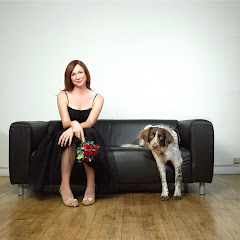
.jpg)